
Context:
Recently, the International Union for Conservation of Nature (IUCN) released an updated Red List of Threatened Species at the IUCN World Conservation Congress in Abu Dhabi, highlighting the increasing extinction risk faced by three Arctic seal species due to shrinking sea ice caused by global warming.
About the Updated List:
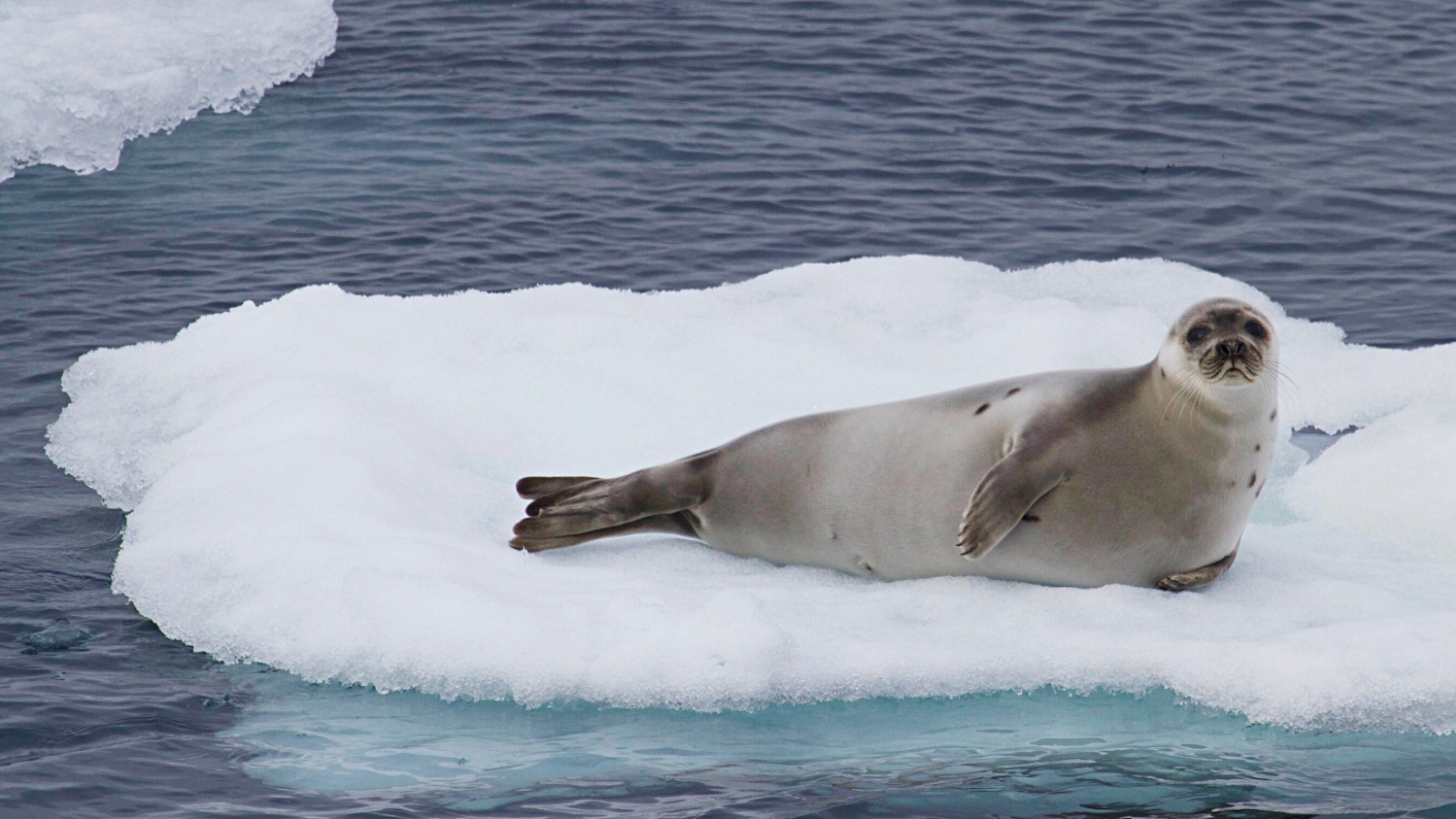
The Hooded Seal (Cystophora cristata) has been reclassified from Vulnerable to Endangered, while the Bearded Seal (Erignathus barbatus) and Harp Seal (Pagophilus groenlandicus) have both been reclassified from Least Concern to Near Threatened on the IUCN Red List.
Importance of Arctic Seals in the Ecosystem:
Arctic seals play an important role in maintaining marine food-web balance. They feed on fish and marine invertebrates and serve as prey for predators such as polar bears. They also contribute to nutrient cycling and support the livelihoods and food security of Indigenous communities. Their ecological importance makes them key components of Arctic marine ecosystems.
Major Threats to Arctic Seals:
-
-
- Sea-Ice Loss: Arctic seals depend on sea ice for breeding, pupping, nursing, moulting and resting. Shrinking and thinning ice reduces suitable habitats and affects their access to feeding grounds.
- Climate Change: Rapid Arctic warming is altering sea-ice extent, ocean temperatures and marine ecosystems, threatening ice-dependent species.
- Human Activities: Shipping, underwater noise pollution, oil and mineral exploration, hunting and accidental capture in fishing gear further increase pressure on seal populations.
- Sea-Ice Loss: Arctic seals depend on sea ice for breeding, pupping, nursing, moulting and resting. Shrinking and thinning ice reduces suitable habitats and affects their access to feeding grounds.
-
What is Arctic Amplification?
-
-
- Arctic amplification refers to the phenomenon in which the Arctic warms significantly faster than the global average, generally around three to four times faster in recent decades. Major causes include:
- Ice-Albedo Feedback: Melting snow and ice expose darker ocean and land surfaces, increasing solar heat absorption.
- Permafrost Thawing: Releases greenhouse gases and can mobilise iron and other metals, affecting freshwater ecosystems.
- Changing Weather Patterns: Altered atmospheric circulation and increased moisture transport influence Arctic precipitation and snow cover.
- The decline of old, thick sea ice further threatens the stability of Arctic ecosystems.
- Arctic amplification refers to the phenomenon in which the Arctic warms significantly faster than the global average, generally around three to four times faster in recent decades. Major causes include:
-
About Atlantification:
Atlantification refers to the increasing influence of relatively warm, salty Atlantic Ocean water in the Arctic Ocean. It leads to ocean warming, increased mixing of water layers, sea-ice loss and changes in marine ecosystems and fisheries.
Measures to Protect Arctic Seals:
The IUCN recommends protecting critical habitats, reducing accidental bycatch, ensuring sustainable hunting practices and minimising underwater noise and other human disturbances. Global reduction of greenhouse-gas emissions is essential for long-term conservation.
About IUCN:
The International Union for Conservation of Nature (IUCN) was established in 1948. It is a global environmental organisation comprising governments, civil society organisations and Indigenous groups. Its major contribution is the IUCN Red List of Threatened Species, which assesses the extinction risk of species worldwide.
Conclusion:
The increasing vulnerability of Arctic seals highlights the direct relationship between climate change and biodiversity loss. Protecting these species requires both habitat conservation and global climate action, particularly the reduction of greenhouse-gas emissions.



