
Context:
Recently, the 17th Kathakali Festival was inaugurated on 18 September 2026 at the Bharata Kalakshetra Auditorium, Thiruvanmiyur, Chennai. Organised by the Kalakshetra Foundation under the Ministry of Culture, the three-day festival will be held from 18 to 20 September 2026.
Theme of the festival:
The festival is themed “Kadha Rasa Sangama – Confluence of Essence of Stories”, highlighting the narrative and expressive dimensions of Kathakali.
What is Kathakali?
-
-
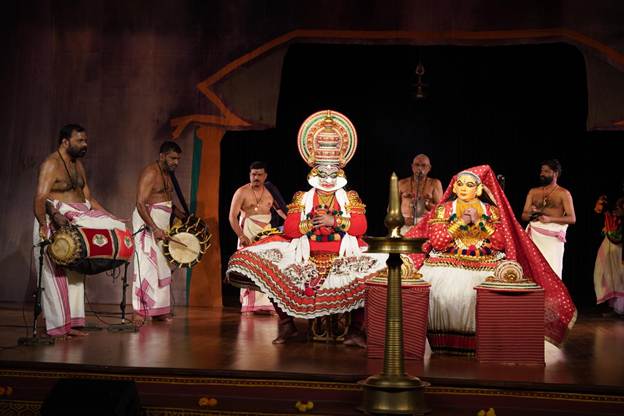
- Kathakali is a major classical dance-drama tradition of Kerala, combining storytelling, dance, music, elaborate costumes, facial expressions and symbolic hand gestures. It developed around the 17th century, drawing upon earlier Kerala theatrical traditions such as Kutiyattam, Krishnanattam and Ramanattam.
- The term Kathakali is derived from Katha meaning “story” and Kali meaning “play”.
- Kathakali is a major classical dance-drama tradition of Kerala, combining storytelling, dance, music, elaborate costumes, facial expressions and symbolic hand gestures. It developed around the 17th century, drawing upon earlier Kerala theatrical traditions such as Kutiyattam, Krishnanattam and Ramanattam.
-
Key Features of Kathakali
-
-
- Elaborate Make-up and Costume: Kathakali uses distinctive vesham (make-up) to communicate the nature of characters. Pacha (green) generally represents noble and virtuous characters, while other make-up categories distinguish different character types.
- Navarasa and Facial Expressions: Performers employ precise movements of the eyes, eyebrows and facial muscles to communicate emotions based on the classical concept of Navarasa.
- Mudras: Hand gestures or mudras form an important symbolic language through which performers communicate dialogue, actions and narrative elements.
- Musical Accompaniment: Performances involve vocalists and traditional percussion instruments such as the Chenda, Maddalam and Chengila.
- Elaborate Make-up and Costume: Kathakali uses distinctive vesham (make-up) to communicate the nature of characters. Pacha (green) generally represents noble and virtuous characters, while other make-up categories distinguish different character types.
-
About Kalakshetra Foundation:
The Kalakshetra Foundation was established in 1936 by Rukmini Devi Arundale in Chennai. It has contributed significantly to the preservation, education and dissemination of Indian classical arts, particularly Bharatanatyam, music, dance and traditional crafts.
Conclusion:
The 17th Kathakali Festival highlights the enduring relevance of India’s traditional performing arts. Such festivals promote preservation, intergenerational transmission and wider dissemination of cultural heritage, while strengthening institutional support for India’s rich intangible traditions.



