
Context:
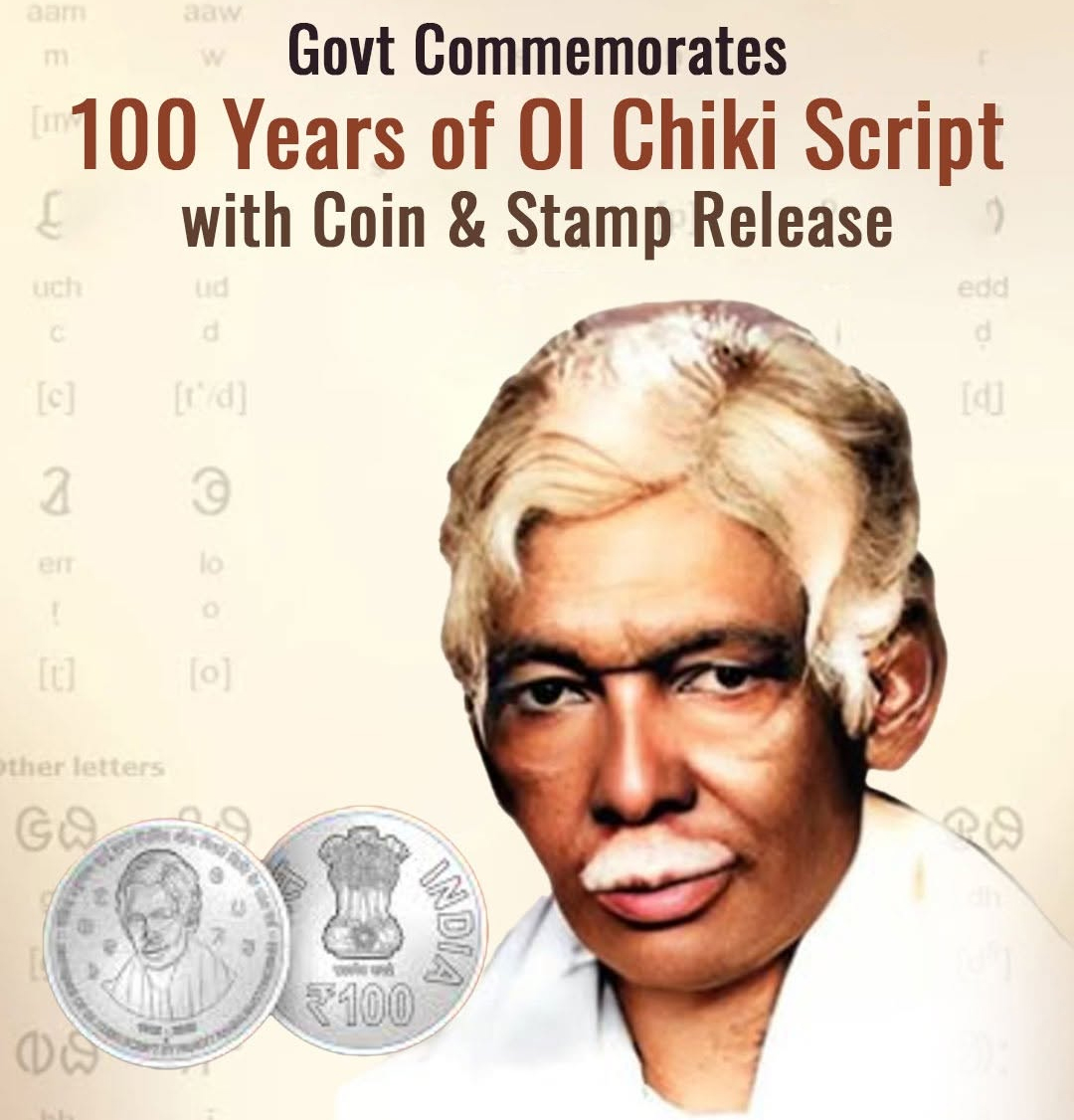
The President of India, Smt. Droupadi Murmu, recently inaugurated the centenary celebrations of the Ol Chiki script in New Delhi, commemorating 100 years since its creation by Pandit Raghunath Murmu in 1925. The celebrations reflect India’s broader policy priority of safeguarding linguistic diversity, cultural identity, and knowledge systems in a multilingual nation.
Historical Background:
-
-
- Santhali, a major tribal language of India, historically relied on oral traditions such as folklore, songs, and storytelling. While these practices preserved cultural identity, the absence of a dedicated script limited formal education, literary growth, and official recognition.
- Pandit Raghunath Murmu created the Ol Chiki script in 1925 to provide Santhali with a scientific and phonetic writing system. His literary contributions, including High Serena (1936), along with other novels, poetry, and grammar books, transformed Santhali from an oral tradition into a vibrant written culture, thereby strengthening tribal pride and identity.
- Santhali, a major tribal language of India, historically relied on oral traditions such as folklore, songs, and storytelling. While these practices preserved cultural identity, the absence of a dedicated script limited formal education, literary growth, and official recognition.
-
Structural and Linguistic Features:
-
-
- Letters: 30, each representing a distinct vowel or consonant
- Phonetic Accuracy: One symbol corresponds to one sound
- Cultural Specificity: Captures unique Santhali phonetics, including glottal stops, unlike borrowed scripts such as Roman, Bengali, or Devanagari
- Impact: Facilitates literacy, education, literature, and digital usage, including Unicode integration and keyboard compatibility
- Letters: 30, each representing a distinct vowel or consonant
-
The precision of Ol Chiki has enabled the standardisation of Santhali, thereby supporting teaching, publishing, and intergenerational knowledge transfer.
Constitutional Recognition and Contemporary Relevance:
-
-
- Santhali was included in the Eighth Schedule of the Constitution in 2003 through the 92nd Constitutional Amendment, with Ol Chiki as its official script. In December 2025, the Constitution of India was translated into Santhali using the Ol Chiki script, thereby expanding democratic access and enabling tribal communities to engage with governance and legal frameworks in their own language.
- The centenary celebrations also reflect India’s emphasis on tribal empowerment, linguistic diversity, and cultural inclusion, aligning with broader initiatives such as Ek Bharat Shreshtha Bharat.
- Santhali was included in the Eighth Schedule of the Constitution in 2003 through the 92nd Constitutional Amendment, with Ol Chiki as its official script. In December 2025, the Constitution of India was translated into Santhali using the Ol Chiki script, thereby expanding democratic access and enabling tribal communities to engage with governance and legal frameworks in their own language.
-
Conclusion:
The Ol Chiki centenary is not merely a celebration of a script but a recognition of tribal identity, cultural resilience, and linguistic justice. From its creation in 1925 to constitutional recognition and modern digital integration, Ol Chiki has enabled the Santhali language to thrive in education, literature, and public life. Its journey underscores the importance of preserving indigenous languages as integral to India’s cultural pluralism, democratic participation, and socio-cultural heritage.



