
Introduction:
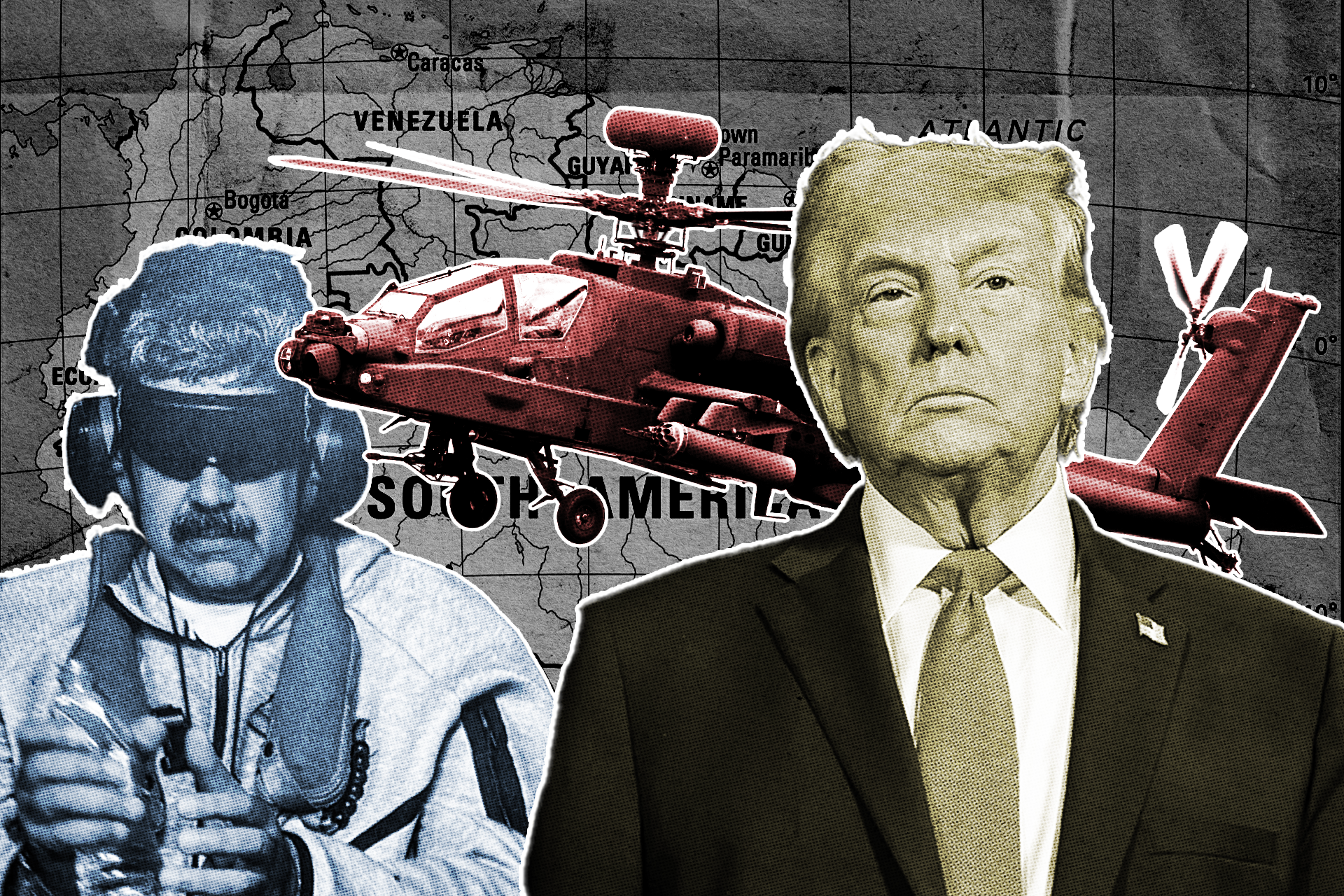
On 3 January 2026, international politics witnessed a major paradigm shift that not only altered the balance of power in the Western Hemisphere but also raised serious questions about the relevance and credibility of the Rules-Based International Order (RBIO) constructed after the Second World War. The detention of Venezuelan President Nicolás Maduro under Operation Absolute Resolve, carried out by the United States, was not merely an episode of regime change in a sovereign state; rather, it signalled the emergence of a new phase in American foreign policy.
-
-
-
- The articulation of the “Donroe Doctrine” by President Donald Trump made it clear that 21st-century great power politics is increasingly abandoning the normative framework of liberal internationalism and reverting to the hard realities of realism and spheres of influence.
- The articulation of the “Donroe Doctrine” by President Donald Trump made it clear that 21st-century great power politics is increasingly abandoning the normative framework of liberal internationalism and reverting to the hard realities of realism and spheres of influence.
-
-
Operation Absolute Resolve:
-
-
-
-
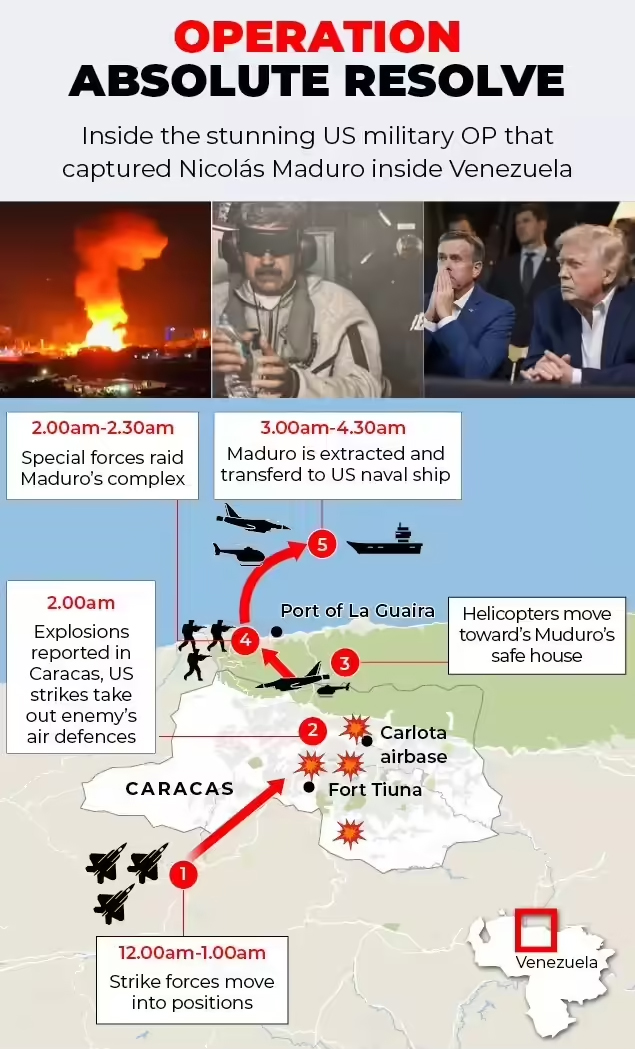
- The military operation conducted in Caracas was described by the United States as a national security mission. Over the preceding months, the growing US naval presence in the Caribbean and the de facto maritime encirclement of Venezuela had already indicated Washington’s shift from diplomatic pressure and economic sanctions towards direct military intervention.
- The principal justification offered for the intervention was the dismantling of a so-called “narco-terrorist regime.” According to the Trump administration, the Maduro government was not merely authoritarian but functioned as a criminal nexus deeply embedded in global narcotics trafficking networks. A notable departure from earlier US interventions was the absence of rhetoric related to “democracy promotion.” Instead, the operation was explicitly framed around the protection of American citizens, highlighting a significant ideological shift in US foreign policy.
- The military operation conducted in Caracas was described by the United States as a national security mission. Over the preceding months, the growing US naval presence in the Caribbean and the de facto maritime encirclement of Venezuela had already indicated Washington’s shift from diplomatic pressure and economic sanctions towards direct military intervention.
-
-
-
The Donroe Doctrine:
The Donroe Doctrine represents a hybrid of the 1823 Monroe Doctrine and Donald Trump’s “America First” worldview. While the original Monroe Doctrine sought to prevent European interference in the Americas, the Donroe Doctrine advances this logic further.
Its key pillars include:
-
-
-
- Revival of Regional Hegemony: The United States views the Western Hemisphere as its exclusive sphere of influence, perceiving the presence of external actors such as China and Russia as direct threats to its national security.
- Militarisation of Intervention: Diplomatic engagement and economic sanctions are increasingly replaced by direct military action as legitimate policy instruments.
- Symbolic Geopolitics: The renaming of the Gulf of Mexico as the “Gulf of America” is not merely semantic but conveys a strategic assertion of US dominance over its near maritime environment.
- Revival of Regional Hegemony: The United States views the Western Hemisphere as its exclusive sphere of influence, perceiving the presence of external actors such as China and Russia as direct threats to its national security.
-
-
By prioritising unilateralism over multilateralism, the doctrine signals America’s willingness to act independently of institutions such as the United Nations or NATO when core interests are perceived to be at stake.
The Fentanyl Crisis: A New Security Discourse and the Expansion of ‘WMD’
-
-
-
- One of the most powerful narratives underpinning the crisis is the growing threat posed by fentanyl and synthetic opioids. According to the World Health Organization, fentanyl is a highly potent synthetic opioid used as a painkiller and anaesthetic, but its lethality lies in the fact that it can be 30 to 100 times more powerful than heroin or morphine. In the United States, more than 69 percent of overdose deaths are linked to fentanyl.
- By categorising fentanyl and its chemical precursors as Weapons of Mass Destruction (WMDs), the Trump administration has fundamentally altered the global security discourse. Traditionally reserved for nuclear, biological, or chemical weapons, the WMD label now extends to narcotics, thereby opening the door to military action against any state accused of facilitating their production or trafficking. This represents a classic case of securitisation, wherein a public health issue is transformed into an existential military threat.
- One of the most powerful narratives underpinning the crisis is the growing threat posed by fentanyl and synthetic opioids. According to the World Health Organization, fentanyl is a highly potent synthetic opioid used as a painkiller and anaesthetic, but its lethality lies in the fact that it can be 30 to 100 times more powerful than heroin or morphine. In the United States, more than 69 percent of overdose deaths are linked to fentanyl.
-
-
Energy at the Core of Geopolitics: Oil Reserves and Economic Dominance
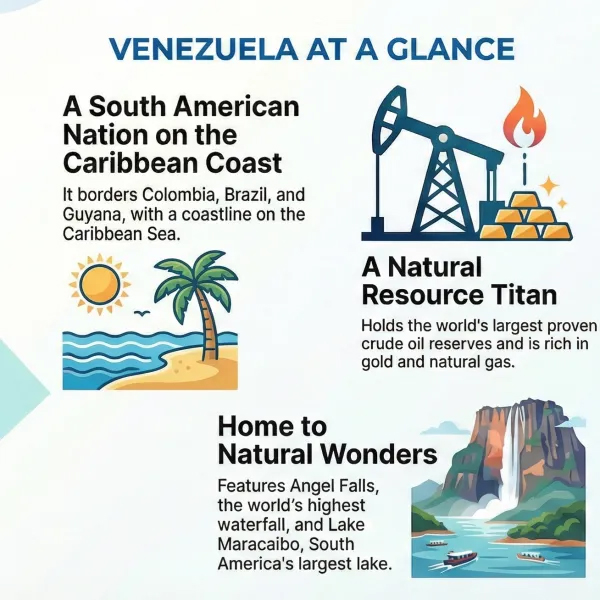
Oil has always been central to Venezuela’s geopolitical significance. With over 300 billion barrels of proven oil reserves, Venezuela possesses the largest reserves in the world, surpassing even Saudi Arabia. Yet, due to mismanagement and US sanctions, production under the Maduro regime declined to approximately one million barrels per day.
The announcement of the return of US oil companies and the reconstruction of Venezuela’s energy infrastructure following Operation Absolute Resolve evokes memories of post-Iraq War energy diplomacy. While the Trump administration argues that oil revenues would be used to rebuild Venezuela itself, the broader geopolitical implications are significant:
-
-
-
- Exclusion of China and Russia: Venezuela’s oil sector had been heavily leveraged against Chinese and Russian loans. China alone is owed nearly $60 billion, largely repayable through oil exports, while Russia’s Rosneft held extensive stakes in Venezuelan oil assets. US control undermines these arrangements.
- Influence over Global Oil Prices: Increased Venezuelan production could weaken the influence of OPEC and particularly Russia-led OPEC+ on global energy markets.
- Exclusion of China and Russia: Venezuela’s oil sector had been heavily leveraged against Chinese and Russian loans. China alone is owed nearly $60 billion, largely repayable through oil exports, while Russia’s Rosneft held extensive stakes in Venezuelan oil assets. US control undermines these arrangements.
-
-

International Law and the Relevance of the United Nations:
-
-
-
- The events of 3 January constitute a direct challenge to the foundational principles of international law, particularly sovereignty and non-intervention. Article 2(4) of the UN Charter explicitly prohibits the use of force against the territorial integrity or political independence of any state.
- Global reactions have been divided. China, Russia, Iran, and Cuba condemned the action as aggression and a violation of international law, whereas several Western allies justified it as a security exception. The inability of the UN Security Council to act, owing to the US veto highlights a structural failure of the multilateral system. This situation reflects a regression towards a 19th-century logic of “might is right,” where international law constrains weaker states but remains negotiable for major powers.
- The events of 3 January constitute a direct challenge to the foundational principles of international law, particularly sovereignty and non-intervention. Article 2(4) of the UN Charter explicitly prohibits the use of force against the territorial integrity or political independence of any state.
-
-
Strategic and Ethical Challenges for India:
For India, the Venezuela crisis presents a complex diplomatic dilemma. India’s foreign policy has traditionally been guided by strategic autonomy and opposition to external intervention in domestic affairs.
-
-
-
- Moral Dilemma: Supporting the US action would dilute India’s long-standing normative commitment to sovereignty, while opposing it could strain growing defence and technological partnerships with the US, including initiatives such as iCET and Indo-Pacific cooperation.
- Energy Security: Indian refineries such as Reliance and Nayara are capable of processing Venezuelan heavy crude. A stabilised Venezuelan oil sector under US oversight could provide India with an alternative to Russian crude and enhance energy diversification.
- Future of Global Order: As a proponent of a multipolar world, India views unilateral doctrines like the Donroe Doctrine as challenges to a rule-based, inclusive international system.
- Moral Dilemma: Supporting the US action would dilute India’s long-standing normative commitment to sovereignty, while opposing it could strain growing defence and technological partnerships with the US, including initiatives such as iCET and Indo-Pacific cooperation.
-
-
India’s likely response lies in a blend of strategic restraint and active diplomacy, avoiding overt alignment while quietly safeguarding its energy and geopolitical interests.
Conclusion:
The detention of Nicolás Maduro marks the erosion of the post-Cold War liberal consensus that shaped global politics for over three decades. The crisis underscores the dangers of a world where international institutions fail to constrain great powers, leading to renewed competition over spheres of influence. The future of global politics will increasingly be defined by the tension between the imperatives of security and the principles of sovereignty.
| UPSC/PCS Main Examination Practice Question: |



