
Introduction:
Terrorism has remained one of the most persistent and complex internal security challenges confronting India. Despite decades of counter-terror operations, legislative measures, intelligence reforms, and international cooperation, the threat landscape continues to evolve, shaped by cross-border terrorism, ideological extremism, cyber-radicalisation, and sophisticated terror financing networks. In this context, India’s move to finalise its first comprehensive national anti-terror policy marks a historic shift in the country’s approach to counter-terrorism.
-
-
- Unlike earlier fragmented responses driven by individual laws, agencies, or episodic military actions, the proposed policy seeks to establish a unified, forward-looking, and institutionalised framework for preventing, responding to, and investigating terrorism. It aims to integrate legal, intelligence, operational, financial, technological, and social dimensions into a coherent national strategy. This transition from reactive counter-terrorism to proactive and pre-emptive security governance is critical for safeguarding national unity, democratic values, and socio-economic stability.
- Unlike earlier fragmented responses driven by individual laws, agencies, or episodic military actions, the proposed policy seeks to establish a unified, forward-looking, and institutionalised framework for preventing, responding to, and investigating terrorism. It aims to integrate legal, intelligence, operational, financial, technological, and social dimensions into a coherent national strategy. This transition from reactive counter-terrorism to proactive and pre-emptive security governance is critical for safeguarding national unity, democratic values, and socio-economic stability.
-
Need for a Comprehensive Anti-Terror Policy:
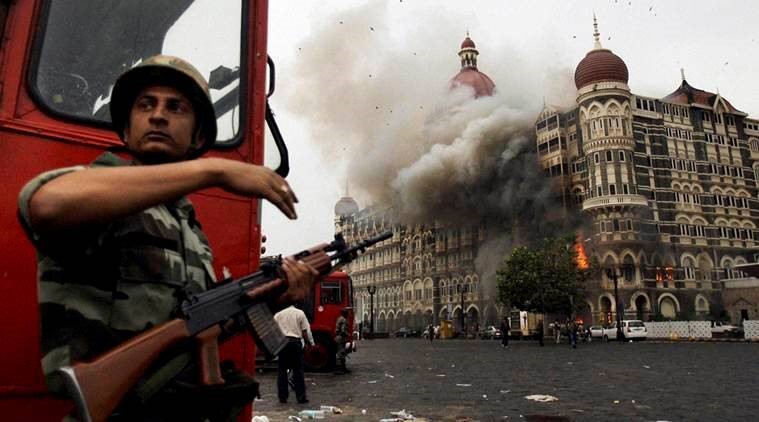
Historically, India’s counter-terror architecture has evolved in response to major terror incidents—the Parliament attack (2001), 26/11 Mumbai attacks (2008), Uri (2016), Pulwama (2019), and recent attacks targeting civilians and security forces. While each episode led to reforms, the overall framework remained sectoral and incident-driven, rather than policy-driven.
Several structural limitations necessitated a comprehensive policy:
· Fragmentation of responsibility among multiple agencies at the Centre and States
· Inconsistent protocols across States, leading to uneven preparedness
· Reactive orientation, focused more on response than prevention
· Emerging threats such as cyberterrorism, lone-wolf attacks, and cryptocurrency-based terror financing
· Coordination gaps between intelligence, law enforcement, and judicial processes
The proposed policy addresses these gaps by providing a single guiding framework that aligns laws, institutions, and operational practices across the country.

Core Objectives of India’s First Anti-Terror Policy:
The overarching objective of the policy is to strengthen national security through integration and anticipation rather than mere reaction. Its specific aims include:
1. Establishing a unified national framework for counter-terrorism
2. Enhancing intelligence coordination and information sharing
3. Standardising operational protocols across States
4. Strengthening preventive capabilities, including early detection and disruption
5. Targeting terror financing ecosystems
6. Addressing radicalisation at the societal level through community engagement
By pursuing these objectives, the policy seeks to ensure that counter-terrorism becomes a continuous, anticipatory, and institution-led process, rather than an episodic emergency response.
Key Pillars of the Anti-Terror Policy:
1. Unified Planning and Federal Coordination
A defining feature of the policy is its emphasis on standardised protocols for all States, ensuring uniformity in preparedness, investigation, and response. While law and order remains a State subject, terrorism is recognised as a national security threat, requiring seamless Centre–State cooperation.
The policy strengthens cooperative federalism by:
-
-
-
- Establishing common operational doctrines
- Enhancing interoperability among State police, ATS units, and central agencies
- Creating clear chains of command during terror incidents
- Establishing common operational doctrines
-
-
This approach balances national coherence with State autonomy, avoiding central overreach while ensuring consistency.
2. Intelligence-Driven and Technology-Enabled Security
Modern terrorism thrives on speed, anonymity, and digital platforms. Recognising this, the policy places intelligence at the heart of counter-terrorism.
Key elements include:
-
-
-
- Integration of NATGRID for real-time data access
- Use of artificial intelligence-based analytics to detect patterns and networks
- Deployment of facial recognition systems and advanced surveillance tools
- Strengthening coordination with agencies like the National Investigation Agency
- Integration of NATGRID for real-time data access
-
-
This intelligence-led approach aims to neutralise threats before they materialise, marking a shift from post-incident investigation to pre-incident prevention.
3. Strengthening Specialised Counter-Terror Units
The policy recognises that effective counter-terrorism requires highly trained, well-equipped, and rapidly deployable forces. It therefore focuses on:
-
-
-
- Advanced training modules for specialised units
- Clearly defined standard operating procedures (SOPs)
- Improved coordination between central and State forces
- Rapid response mechanisms for urban and rural terror scenarios
- Advanced training modules for specialised units
-
-
This enhances India’s capacity to deal with diverse attack modes—from urban hostage situations to rural insurgency-linked violence.
4. Financial Counter-Terror Measures
Terrorism survives on money. The policy introduces a comprehensive framework to disrupt terror financing networks, both traditional and modern.
Key focus areas include:
-
-
-
- Tracking hawala channels and cash-based networks
- Monitoring cryptocurrency transactions and digital wallets
- Strengthening coordination with financial intelligence units
- Aligning domestic measures with FATF standards
- Tracking hawala channels and cash-based networks
-
-
By choking financial lifelines, the policy targets the ecosystem that sustains terrorism, not merely its foot soldiers.
5. Community Engagement and Deradicalisation
A significant innovation of the policy is its recognition that terrorism is not only a security problem but also a social one. Radicalisation often feeds on alienation, misinformation, and identity crises.
Accordingly, the policy emphasises:
-
-
-
- Community policing initiatives
- Counter-narratives to extremist propaganda
- Deradicalisation and rehabilitation programmes
- Engagement with civil society, educators, and local leaders
- Community policing initiatives
-
-
This preventive, bottom-up approach seeks to address root causes rather than symptoms, strengthening social resilience.
6. Legal Integration and Harmonisation
India already possesses a strong legal framework, including:
-
-
-
- The Unlawful Activities (Prevention) Act (UAPA)
- Provisions under the Bharatiya Nyaya Sanhita, 2023
- Investigative powers of the National Investigation Agency
- The Unlawful Activities (Prevention) Act (UAPA)
-
-
However, these laws have often operated in silos. The new policy aims to harmonise legal provisions, ensuring:
-
-
-
- Faster investigations and prosecutions
- Reduced procedural delays
- Greater clarity for enforcement agencies
- Faster investigations and prosecutions
-
-
This strengthens the rule of law while maintaining constitutional safeguards.
|
Terrorism in the Indian Context Legally, terrorism is defined under Section 113 of the Bharatiya Nyaya Sanhita, 2023, as acts intended to threaten the unity, integrity, sovereignty, security, or economic security of India, or to instil fear among the population. In practice, terrorism in India manifests in multiple forms:
|
Impact of Terrorism on India:
The consequences of terrorism extend far beyond immediate casualties:
-
-
- Human impact: Loss of life, trauma, and long-term psychological scars
- Social impact: Fear, polarisation, and erosion of trust
- Economic impact: Damage to infrastructure, tourism losses, market instability
- Diplomatic impact: Strained international relations and regional instability
- Fiscal burden: Increased expenditure on security and defence
- Human impact: Loss of life, trauma, and long-term psychological scars
-
A proactive policy is thus essential not only for security but also for sustainable development.
Challenges:
-
-
- Balancing national security and civil liberties: When implementing counter-terrorism measures, it must be ensured that they do not violate the fundamental rights guaranteed by the Constitution and democratic values.
- Center-state coordination: Terrorism is a matter of national security, while law and order is a state subject; therefore, successful policy implementation is impossible without effective cooperative federalism.
- Cyber terrorism and technological risks: Encrypted communication and online digital platforms are creating new types of security challenges.
- Administrative efficiency and political will: A strong institutional framework, administrative efficiency, and sustained political support are essential for effective implementation.
- Balancing national security and civil liberties: When implementing counter-terrorism measures, it must be ensured that they do not violate the fundamental rights guaranteed by the Constitution and democratic values.
-
Conclusion:
The finalisation of India’s first comprehensive anti-terror policy represents a transformational moment in national security governance. By integrating intelligence, law enforcement, legal frameworks, financial controls, technology, and social interventions, the policy moves India decisively from reactive containment to proactive prevention.
| UPSC/PCS Mains Exam Question: |



