
Why in News:
Recently, scientists from the Zoological Survey of India (ZSI) published an important research study on Indian cockroaches (Blattodea) in the international taxonomy journal Zootaxa.
Key Highlights:
-
-
- High Endemism: According to the report, India has 191 recorded species of cockroaches. More than 60% of these (around 119 species) are endemic, meaning they are found only in India.
- First DNA Barcode Library: Scientists have prepared India’s first and largest DNA Barcode Reference Library. For this, more than 100 high-quality barcodes were developed using the mitochondrial cytochrome c oxidase I gene. DNA Barcoding is an advanced biological technique used to identify the specific species of an unknown organism.
- Cryptic Diversity: Genetic analysis revealed 86 to 99 distinct genetic lineages from just 150 samples. Among these, 44 lineages are still unnamed, indicating the possibility of discovering new species in the future. The recently discovered new species from agricultural fields in Pune, Neoloboptera peninsularis, is a direct example of this.
- Connection with the Gondwana Period: Time-calibrated phylogenetic analysis suggests that the diversification of Indian cockroaches dates back nearly 162 million years. This timeline corresponds with the geological history of the fragmentation of the Gondwana supercontinent and the separation of the Indo-Madagascar plate from Africa.
- High Endemism: According to the report, India has 191 recorded species of cockroaches. More than 60% of these (around 119 species) are endemic, meaning they are found only in India.
-
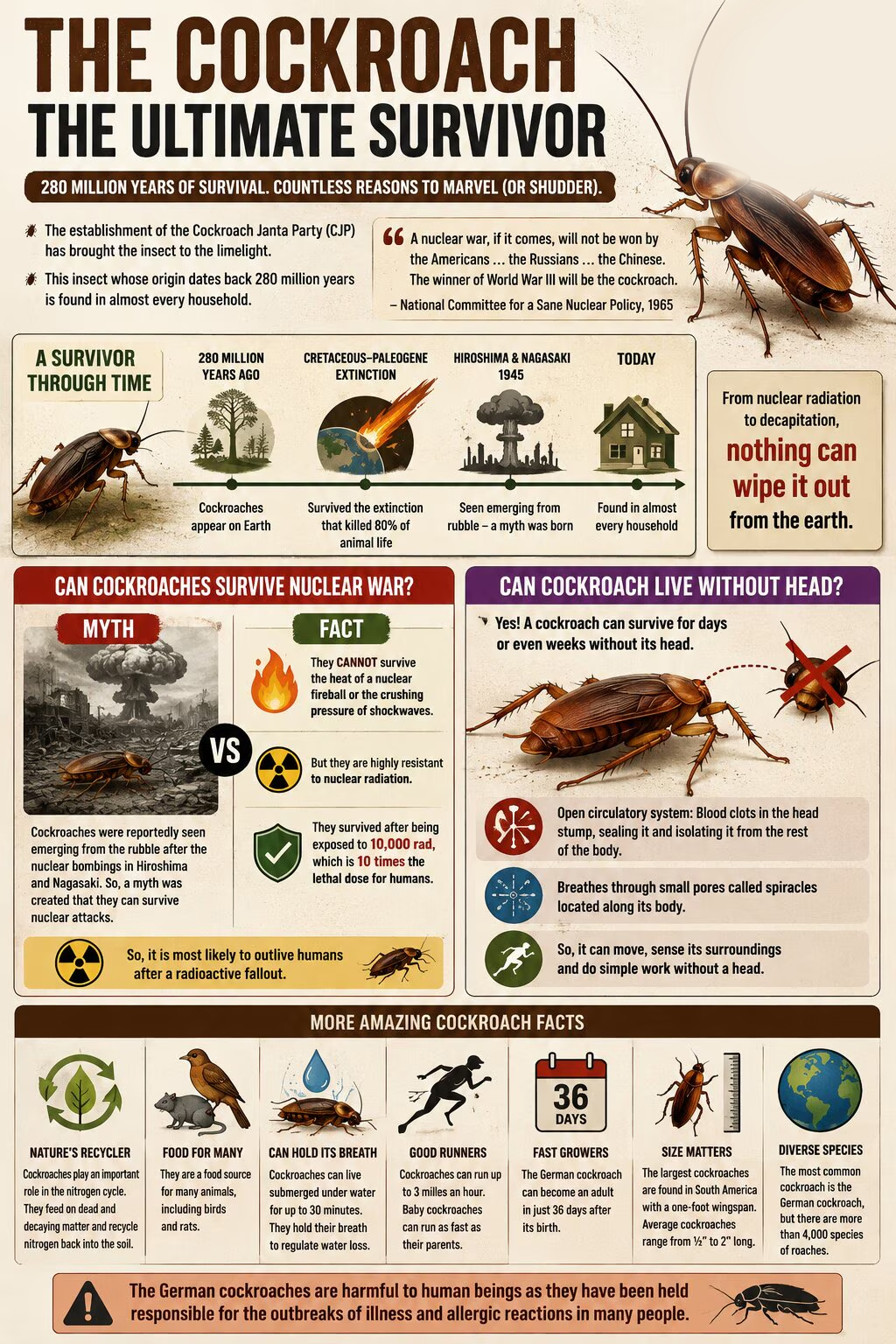
Ecological Importance:
Cockroaches are generally viewed only as dirty insects that spread diseases. However, they possess significant ecological importance:
-
-
- Nutrient Cycling: Out of the 5,000 species found worldwide, less than 1% live as pests in human habitats. Most species inhabit forests and leaf litter. They decompose dead organic matter and help make the soil fertile.
- Foundation of the Food Web: These insects serve as a major food source for birds, reptiles, and small mammals, thereby maintaining the balance of the food chain.
- Bioindicators: Wild cockroaches are highly sensitive to environmental and habitat changes. Therefore, they act as natural indicators for monitoring ecosystem health.
- Seed Dispersal: Some forest-dwelling cockroach species help in dispersing the seeds of certain plants. They transport seeds either by consuming them or by carrying them attached to their bodies to safer locations, thereby supporting the natural regeneration of plants.
- Soil Aeration: By creating tunnels and burrows beneath the soil or within decaying leaf litter, these insects naturally dig the soil. This improves the flow of oxygen and water within the soil, a process known as soil aeration. This process is extremely important for the growth of plant roots.
- Nutrient Cycling: Out of the 5,000 species found worldwide, less than 1% live as pests in human habitats. Most species inhabit forests and leaf litter. They decompose dead organic matter and help make the soil fertile.
-
Conclusion:
This first DNA Barcode Reference Library prepared by the Zoological Survey of India is not merely a documentation of cockroach species, but also a historic step toward strengthening India’s broader Biological Sovereignty. The integration of traditional taxonomy with modern technologies such as DNA Barcoding (an integrated taxonomic approach) will prove to be a major achievement in fulfilling India’s National Biodiversity Targets.



