
Context:
Recently, the National Organ and Tissue Transplant Organization (NOTTO) launched a real-time national portal and mobile application with the objective of making the organ transplantation process more transparent, efficient, and equitable. The portal will create a unified National Waiting List of patients awaiting organ transplants across the country, monitor organ allocation in real time, and provide the facility of an Aadhaar-linked Organ Pledge.
Why is the New Portal Important?
-
-
- Until now, different states in India have followed varying criteria for organ allocation, making it challenging to ensure transparency and equity. The new portal seeks to address this issue. Through this platform, hospitals, state authorities, and regional organizations across the country will be connected on a common digital platform, enabling organ allocation to be carried out in a more scientific and time-bound manner.
- The portal also provides a facility to register requests under the "Super Urgent" category for critically ill patients. Additionally, the post-transplant health status of recipients will be recorded at the national level, leading to the creation of India's first comprehensive database on transplant outcomes.
- Until now, different states in India have followed varying criteria for organ allocation, making it challenging to ensure transparency and equity. The new portal seeks to address this issue. Through this platform, hospitals, state authorities, and regional organizations across the country will be connected on a common digital platform, enabling organ allocation to be carried out in a more scientific and time-bound manner.
-
Organ Donation and Transplantation System in India:
-
-
- Organ transplantation in India is governed by the Transplantation of Human Organs and Tissues Act, 1994 (THOTA), along with its subsequent amendments. Living donors can donate organs to their near relatives, while the organs of a person declared brain dead can, with the consent of the family, save the lives of multiple patients in need.
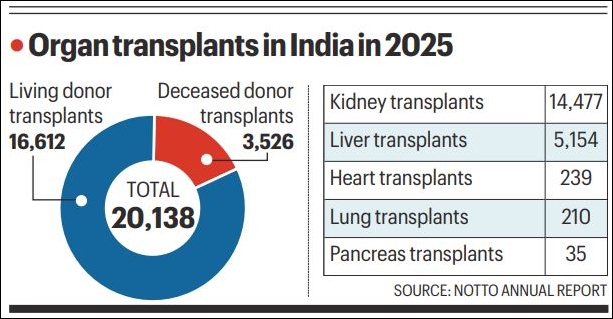
- According to government data, a total of 15,561 organ transplants were performed in India in 2022, of which 2,765 transplants were carried out using organs obtained from deceased donors. Although India ranks among the leading countries in terms of the number of organ transplants performed, its deceased organ donation rate remains significantly lower than that of many developed nations.
- Organ transplantation in India is governed by the Transplantation of Human Organs and Tissues Act, 1994 (THOTA), along with its subsequent amendments. Living donors can donate organs to their near relatives, while the organs of a person declared brain dead can, with the consent of the family, save the lives of multiple patients in need.
-
Role of NOTTO:
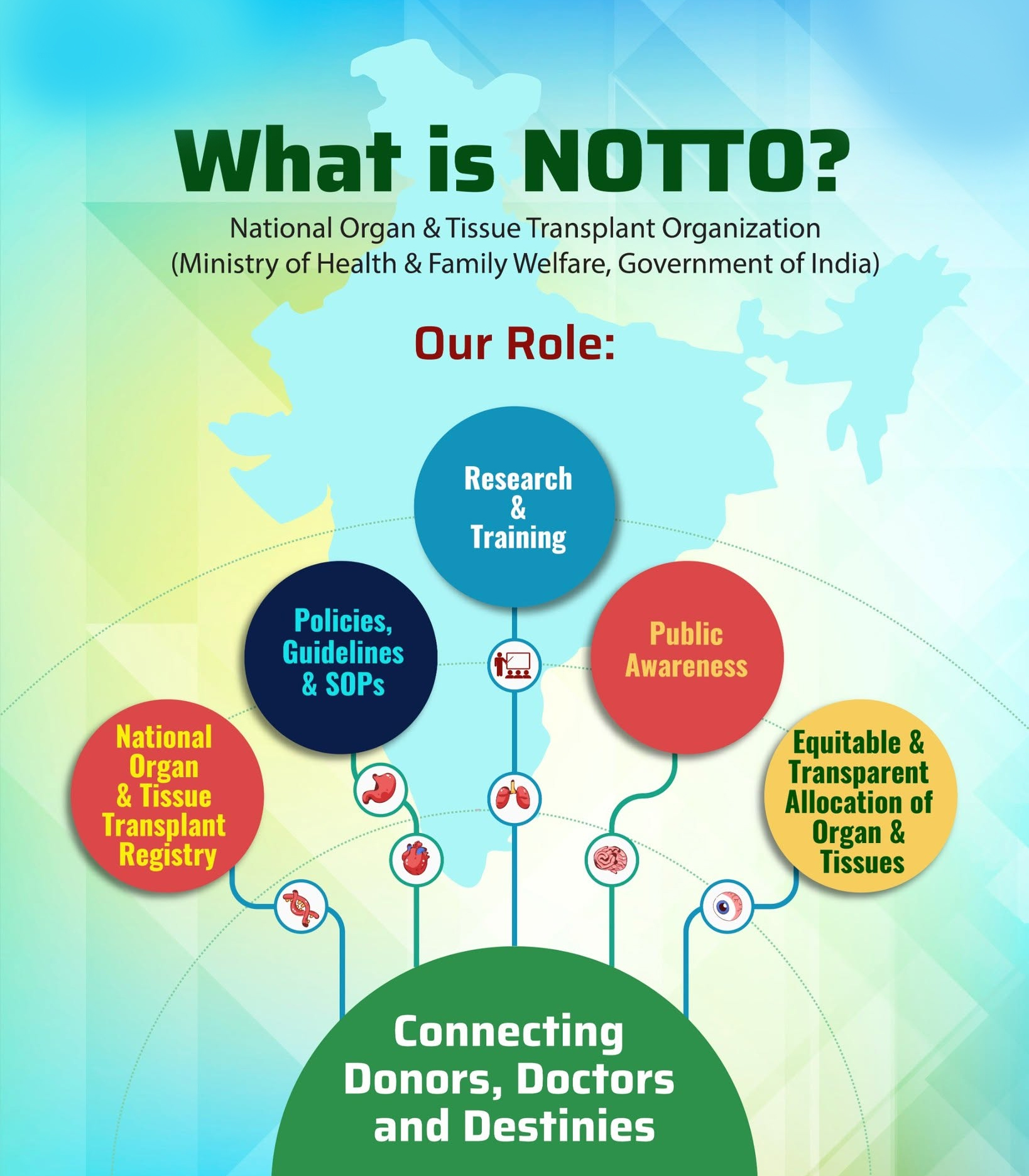
The National Organ and Tissue Transplant Organization (NOTTO) is the national-level nodal agency functioning under the Ministry of Health and Family Welfare. Its primary responsibilities include developing a national network for the retrieval, allocation, and distribution of organs and tissues, ensuring coordination among different states, and promoting public awareness regarding organ donation. The new digital portal is regarded as a significant institutional reform in this direction.
Major Challenges:
Although this initiative is highly significant, its effective implementation faces several challenges:
-
-
- Different states continue to follow varying organ allocation criteria and priority systems.
- Uneven digital infrastructure and data integration capabilities across hospitals.
- Lack of public awareness and social acceptance regarding deceased organ donation.
- The need to ensure ethics, privacy, and data security in organ transplantation.
- Limited availability of transplantation facilities in rural and remote areas.
- Different states continue to follow varying organ allocation criteria and priority systems.
-
Role of Technology:
Developed jointly by NOTTO and the Centre for Development of Advanced Computing (C-DAC), this portal represents a major step towards digital health governance. Features such as real-time data, a national waiting list, nationwide matching of swap donors, recording of transplant outcomes, and Aadhaar-based organ donation pledges will make the entire process more transparent and accountable. At the same time, the portal will provide reliable data to support evidence-based health policymaking.
Conclusion:
India continues to face a significant gap between the demand for and availability of transplantable organs. In this context, the new national real-time portal is not merely a technological innovation but also a major reform towards creating an equitable, transparent, and life-saving healthcare system. If inter-state coordination, a uniform organ allocation policy, digital infrastructure, and public awareness are strengthened simultaneously, this initiative can play a decisive role in ensuring timely access to life-saving organs for thousands of patients and in fostering a stronger culture of organ donation in India.



