
Atomic Clock Failure and Challenges for India’s Navigation System
Context:
Recently, India’s indigenous satellite navigation system NavIC has faced a major setback due to failure of the IRNSS-1F satellite’s atomic clock, has reduced the number of fully operational satellites in the constellation to just three, below the minimum required for navigation services.
Why Atomic Clocks Matter:
Atomic clocks are the core technology behind satellite navigation systems.
They:
-
-
- Provide ultra-precise timing signals
- Allow receivers on Earth to calculate distance from satellites
- Enable accurate positioning and navigation.
- Without accurate timing signals, satellites cannot provide reliable navigation services.
- Provide ultra-precise timing signals
-
About NavIC:
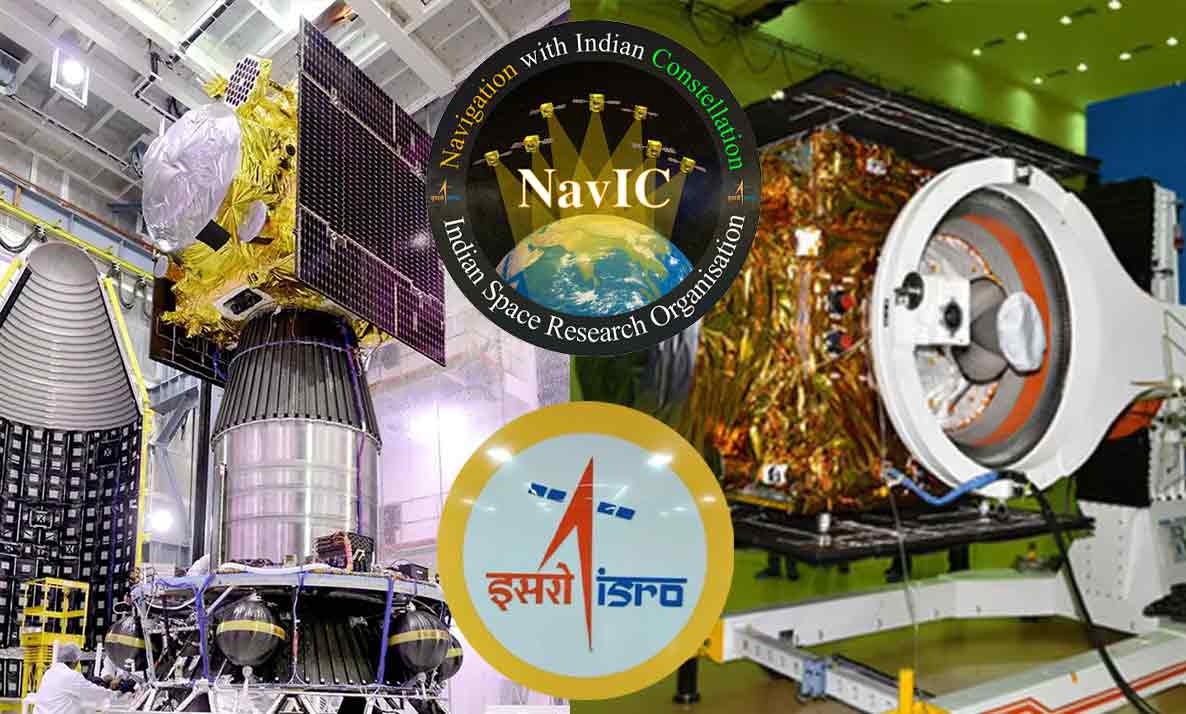
NavIC (Navigation with Indian Constellation), also known as the Indian Regional Navigation Satellite System (IRNSS), is India’s indigenous satellite navigation system developed by ISRO. It was designed to provide accurate positioning and timing services over India and regions up to about 1,500 km beyond its borders.
Key Features:
-
-
- Developed by the Indian Space Research Organisation (ISRO)
- Regional alternative to global systems like:
- GPS (USA)
- GLONASS (Russia)
- Galileo (EU)
- BeiDou (China)
- GPS (USA)
- Designed constellation: 7 satellites
- 3 geostationary satellites (GEO)
- 4 geosynchronous satellites (GSO)
- 3 geostationary satellites (GEO)
- Accuracy: around 5 meters over India.
- Developed by the Indian Space Research Organisation (ISRO)
-
Strategic Importance of NavIC:
Navigation systems are critical strategic infrastructure. NavIC reduces India’s dependence on foreign systems like GPS, especially during geopolitical conflicts.
Military Applications
Used by:
-
-
- Indian Armed Forces
- Missile guidance
- Secure navigation in conflict zones
- Indian Armed Forces
-
Civilian Applications
NavIC supports:
-
-
- Disaster management
- Maritime navigation
- Aviation
- Vehicle tracking
- Smartphones and logistics systems.
- Disaster management
-
National Security
Navigation systems are crucial for border surveillance, naval operations, and disaster response.
Structural Challenges:
The NavIC programme faces several structural challenges:
-
-
- Aging Satellites: Many first-generation IRNSS satellites launched between 2013–2016 are nearing or exceeding their design life of around ten years.
- Atomic Clock Failures: Multiple satellites have experienced clock failures, weakening the reliability of the constellation.
- Limited Constellation Size: Unlike global navigation systems such as GPS or Galileo, NavIC has a smaller regional constellation, making it more vulnerable to satellite failures.
- Aging Satellites: Many first-generation IRNSS satellites launched between 2013–2016 are nearing or exceeding their design life of around ten years.
-
Steps Being Taken by ISRO:
To strengthen NavIC, ISRO has initiated several measures:
Second-generation satellites (NVS series): New satellites with improved atomic clocks.
Additional launches planned
NVS-03
NVS-04
NVS-05
to strengthen the constellation.
Integration with smartphones: The government has mandated NavIC compatibility in some devices to increase adoption.
Improved atomic clock technology: New satellites use more reliable clock systems.
Conclusion:
The recent setbacks do not signify the collapse of India’s navigation ambitions but highlight the need for continuous satellite replenishment and technological resilience. Strengthening NavIC will remain vital for India’s strategic autonomy and emerging space capabilities in the coming decades.



