
Naneghat Caves
Context:
Recently, the Pune Police booked a man for illegal construction near the Naneghat Caves in Junnar taluka of Pune district. The case was registered under the Ancient Monuments and Archaeological Sites and Remains (AMASR) Act following a complaint by officials of the Archaeological Survey of India (ASI).
Cave Architecture in India:
• Cave architecture flourished with the rise of Buddhism and Jainism in the 5th and 4th centuries BCE.
• Caves provided isolation for meditation, ascetic practices, and frugal living for the Buddhist, Jain, and Ajivika sects.
• This period witnessed the development of spectacular rock-cut art and architecture, which are considered hallmarks of Indian cultural heritage.
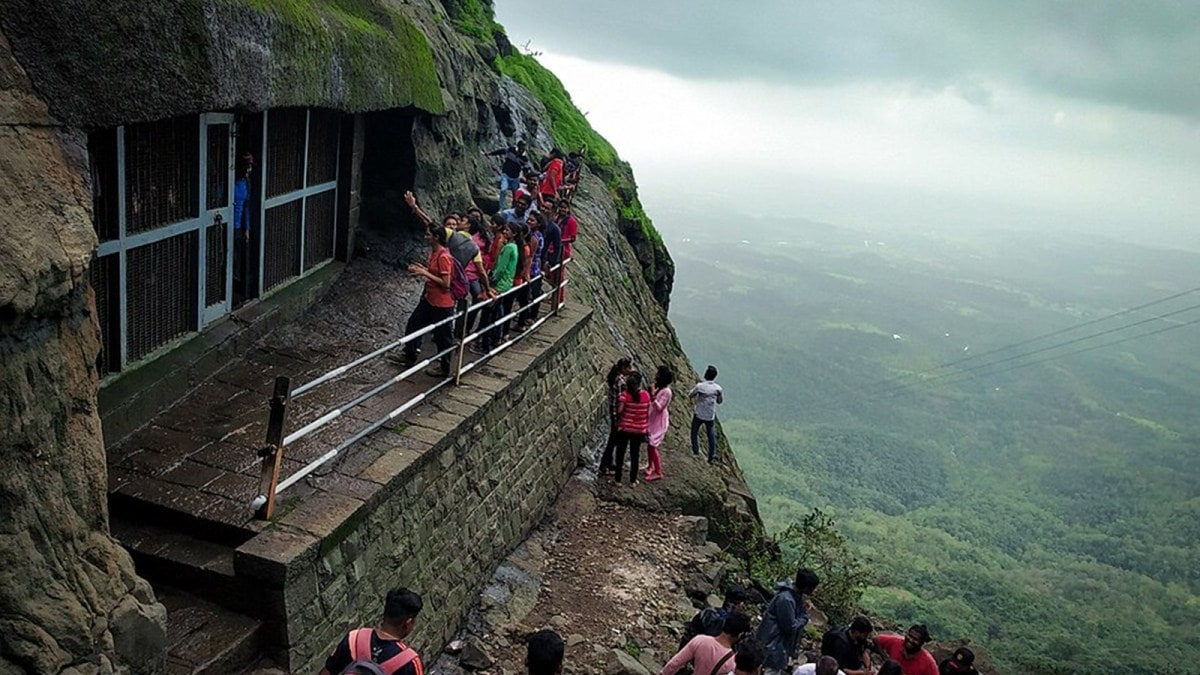
Key Sites in Junnar Taluka:
1. Naneghat Caves:
o Dating back to the 1st century BCE, the caves contain Brahmi inscriptions detailing Satavahana rulers and early trade routes.
o They served as a corridor between the Deccan Plateau and the western coast and were important for commerce and administration.
2. Shivneri Fort:
o It houses ancient fortifications and water management systems, reflecting phases from the early historic to the medieval period.
o It is the birthplace of Chhatrapati Shivaji, the founder of the Maratha Empire.
3. Lenyadri Caves:
o Part of a Buddhist rock-cut complex, these caves are notable for their chaitya and vihara structures carved into the hillside.
Prominent Caves of Western India:
1. Ajanta Caves (Maharashtra):
o A UNESCO World Heritage Site (1983), built over 2,000 years ago.
o It contains 29 chaityas and viharas with paintings such as Padmapāṇi Bodhisattva and the Mahājanaka Jātaka.
2. Ellora Caves (Maharashtra):
o Houses Buddhist, Hindu, and Jain monasteries and temples.
o Includes the Kailashnatha monolith, one of the largest monolithic temples in the world.
3. Elephanta Caves (Maharashtra):
o 5th-century CE rock-cut temples dedicated to Lord Shiva.
o Notable for colossal sculptures located on Elephanta Island.
4. Varaha Cave Temple & Krishna Mandapam (Tamil Nadu):
o 7th-century monuments showcasing Pallava architecture and bas-reliefs of Vishnu and Krishna.
5. Bagh and Badami Caves (Madhya Pradesh & Karnataka):
o The Bagh Caves (500–600 CE) depict simpler Ajanta-style structures.
o The Badami Caves feature Vaishnava, Shaiva, and Jaina shrines with sculptures of Vishnu’s avatars and Hari-Hara.
Conclusion:
The Naneghat Caves are not merely an archaeological treasure of the Satavahana era but also a symbol of India’s ancient trade networks, evolving scripts and numeration systems, and the interplay between religion and commerce. Their preservation is vital for understanding early Deccan history, economic linkages, and socio-cultural developments between the coast and the interior regions of ancient India.



