
Moody’s Cuts India’s Growth Forecast
Context:
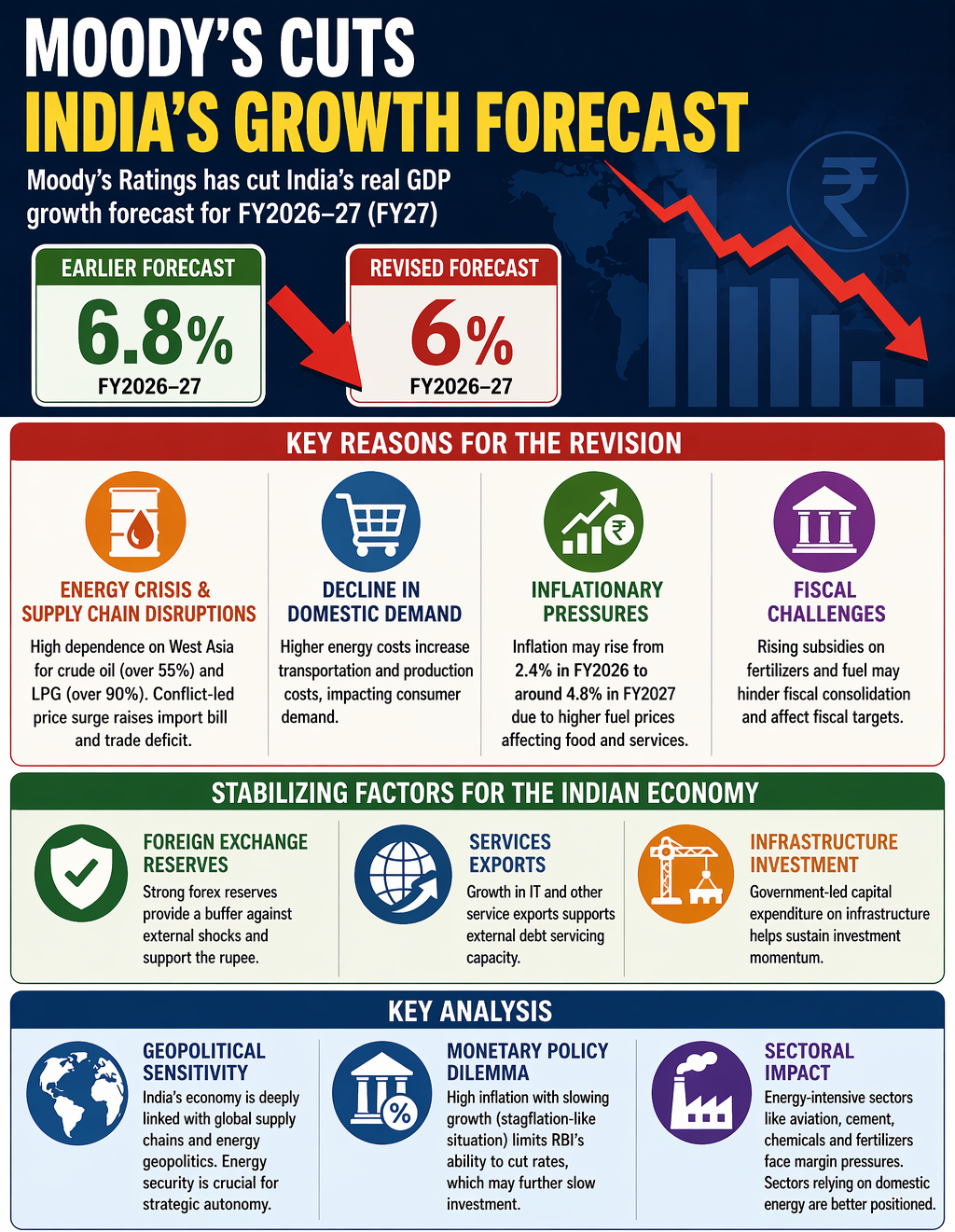
Recently, Moody’s Ratings has reduced India’s real GDP growth forecast for FY2026–27 (FY27) from 6.8% to 6%. This revision has primarily been made in response to rising tensions in West Asia (Middle East) and the resulting global uncertainties.
Key Reasons for the Revision:
-
-
- Energy Crisis and Supply Chain Disruptions: India depends heavily on West Asia for a significant portion of its crude oil and LPG requirements (over 55% and 90% respectively). The ongoing conflict has led to a surge in oil and gas prices, increasing India’s import bill and putting pressure on the trade deficit.
- Decline in Domestic Demand: Higher energy costs have made transportation and production more expensive. This has directly impacted consumer demand, which is a key driver of the Indian economy.
- Inflationary Pressures: According to Moody’s, inflation, which was around 2.4% in FY2026, may rise to approximately 4.8% in FY2027. The increase in fuel prices has had a spillover effect on food items and services.
- Fiscal Challenges: Rising subsidies on fertilizers and fuel may affect the government’s fiscal consolidation targets, making it harder to maintain fiscal discipline.
- Energy Crisis and Supply Chain Disruptions: India depends heavily on West Asia for a significant portion of its crude oil and LPG requirements (over 55% and 90% respectively). The ongoing conflict has led to a surge in oil and gas prices, increasing India’s import bill and putting pressure on the trade deficit.
-
Stabilizing Factors for the Indian Economy:
Despite the downgrade, Moody’s has highlighted certain strengths of the Indian economy:
-
-
- Foreign Exchange Reserves: India’s strong forex reserves act as a buffer against external shocks and help stabilize the rupee.
- Services Exports: Continued growth in IT and other service exports supports external debt servicing capacity.
- Infrastructure Investment: Government-led capital expenditure (Capex) on infrastructure helps sustain investment momentum.
- Foreign Exchange Reserves: India’s strong forex reserves act as a buffer against external shocks and help stabilize the rupee.
-
Key Analysis:
-
-
- Geopolitical Sensitivity: This development highlights how deeply India’s domestic economy is linked with global supply chains and energy geopolitics. Energy security is crucial for India’s strategic autonomy.
- Monetary Policy Dilemma: High inflation combined with slowing growth (a stagflation-like situation) makes it difficult for the Reserve Bank of India to reduce policy rates (Repo Rate), which could further slow investment.
- Sectoral Impact: Energy-intensive sectors such as aviation, cement, chemicals, and fertilizers are facing margin pressures, while sectors relying on domestic energy resources are relatively better positioned.
- Geopolitical Sensitivity: This development highlights how deeply India’s domestic economy is linked with global supply chains and energy geopolitics. Energy security is crucial for India’s strategic autonomy.
-
Conclusion:
Although the reduction in growth forecast is a matter of concern, India continues to remain one of the fastest-growing major economies in the world. The current situation underscores the importance of initiatives like “Atmanirbhar Bharat,” particularly in energy diversification and renewable energy. In the long run, structural reforms and encouragement of private investment will be essential to withstand external shocks.



