
Excavations of Keeladi and seven other sites
Context:
Recently, The Archaeological Survey of India (ASI) has granted permission to the Tamil Nadu State Department of Archaeology to undertake excavations at Keeladi and seven other sites for one year.
Objectives of the Excavations:
The current excavation phase aims to:
· Study ancient iron technology
· Explore maritime trade networks
· Establish cultural and economic links with Roman and other civilizations
Key Highlights of the Excavations:
Large-scale excavation drive
· A total of 13 sites will be excavated in Tamil Nadu—highest in six decades.
· Excavations are expected to begin soon and continue until September (before monsoon).
Sites approved for excavation
Apart from Keeladi, seven major sites include:
· Nagapattinam – ancient maritime centre
· Manikollai – Sangam-era glass bead production
· Vellalur – Roman coin findings
· Karivalamvanthanallur – Roman trade links
· Adichanur – Iron Age burial site
· Thelunganur – Iron Age remains
· Pattinamarudur – conch ornament production
These sites reflect diverse cultural phases—Iron Age, Sangam Age, and early historic trade networks.
About Keeladi Excavation Site:
-
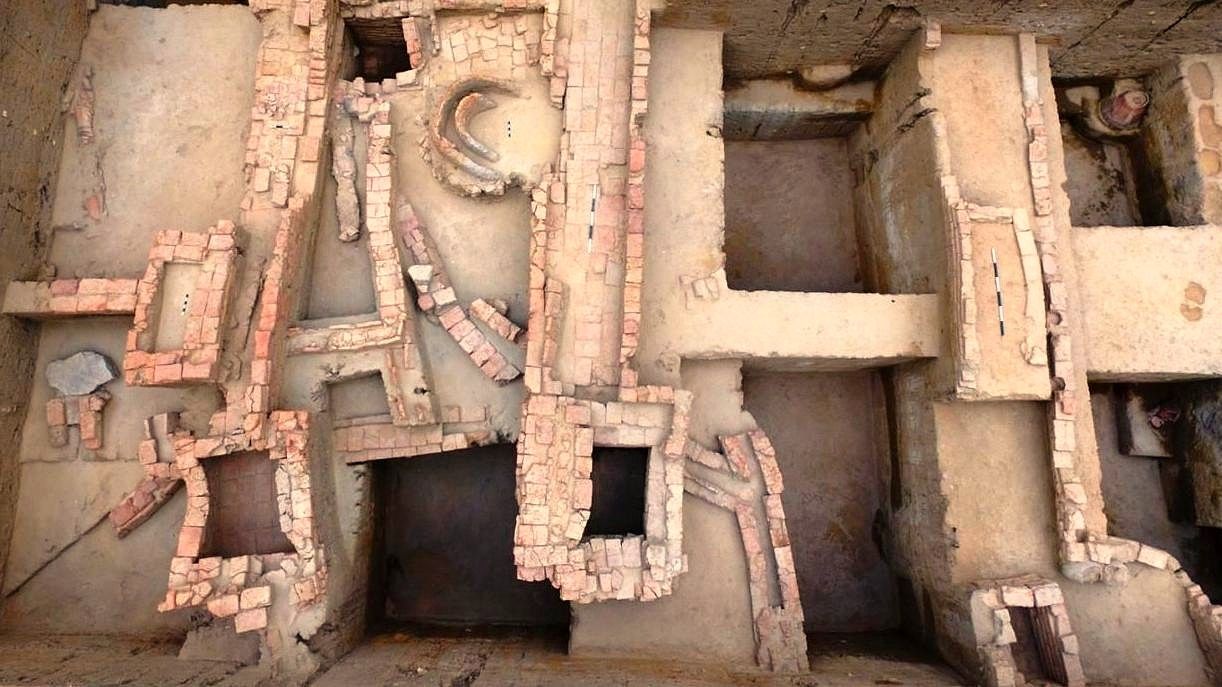
- Located near Madurai, Tamil Nadu along Vaigai River
- Represents Sangam Age civilisation (c. 6th century BCE onwards)
- Excavations started in 2015
- Located near Madurai, Tamil Nadu along Vaigai River
Key Findings:
-
- Urban settlement with:
- Brick structures
- Drainage systems
- Industrial activity (beads, dyes)
- Brick structures
- Evidence of:
- Early literacy (Tamil-Brahmi script)
- Trade links (Roman artefacts)
- Early literacy (Tamil-Brahmi script)
- Urban settlement with:
The Keeladi excavations clearly indicate a significant transition from the Iron Age to the early historic period. Initially, the region was associated with the Megalithic culture, where burial practices were prominent, but over time, an organized urban settlement developed. This transformation shows that urbanization in South India evolved independently and progressed parallel to the Gangetic Valley civilization, thereby strengthening the idea of a multi-centric development of civilization in India.
About ASI:
-
- Established in 1861 by Alexander Cunningham
- Under Ministry of Culture
- Established in 1861 by Alexander Cunningham
Functions:
-
-
- Archaeological excavations & conservation
- Protection of monuments (AMASR Act, 1958)
- Epigraphy & numismatics studies
- Archaeological excavations & conservation
-
About Sangam Age (300 BCE – 300 CE):
-
- Earliest Tamil literature: Sangam texts
- Society:
- Urban centres
- Trade-based economy
- Urban centres
- Political units:
- Chera, Chola, Pandya
- Chera, Chola, Pandya
- Earliest Tamil literature: Sangam texts
Centre–State Issues in Archaeology:
-
- Excavation requires ASI permission even for states
- Recent controversy:
- Delay in approvals raised by M. K. Stalin
- Delay in approvals raised by M. K. Stalin
- Reflects:
- Federal tensions
- Control over interpretation of history
- Federal tensions
- Excavation requires ASI permission even for states
Broader Cultural Importance:
-
- Challenges North-centric view of ancient urbanisation
- Supports idea of multiple centres of civilisation in India
- Strengthens narrative of indigenous urban development
- Challenges North-centric view of ancient urbanisation
Prelims Pointers:
-
- Keeladi → Sangam Age site
- Located on → Vaigai River
- Associated script → Tamil-Brahmi
- Excavation authority → ASI approval mandatory
- Keeladi → Sangam Age site
Conclusion:
The renewed excavation approvals mark a turning point in understanding India’s ancient past. Keeladi, in particular, is emerging as a key site redefining early Indian urban history, with implications for archaeology, historiography, and federal governance.



