
Industrial Unrest in the NCR
Context:
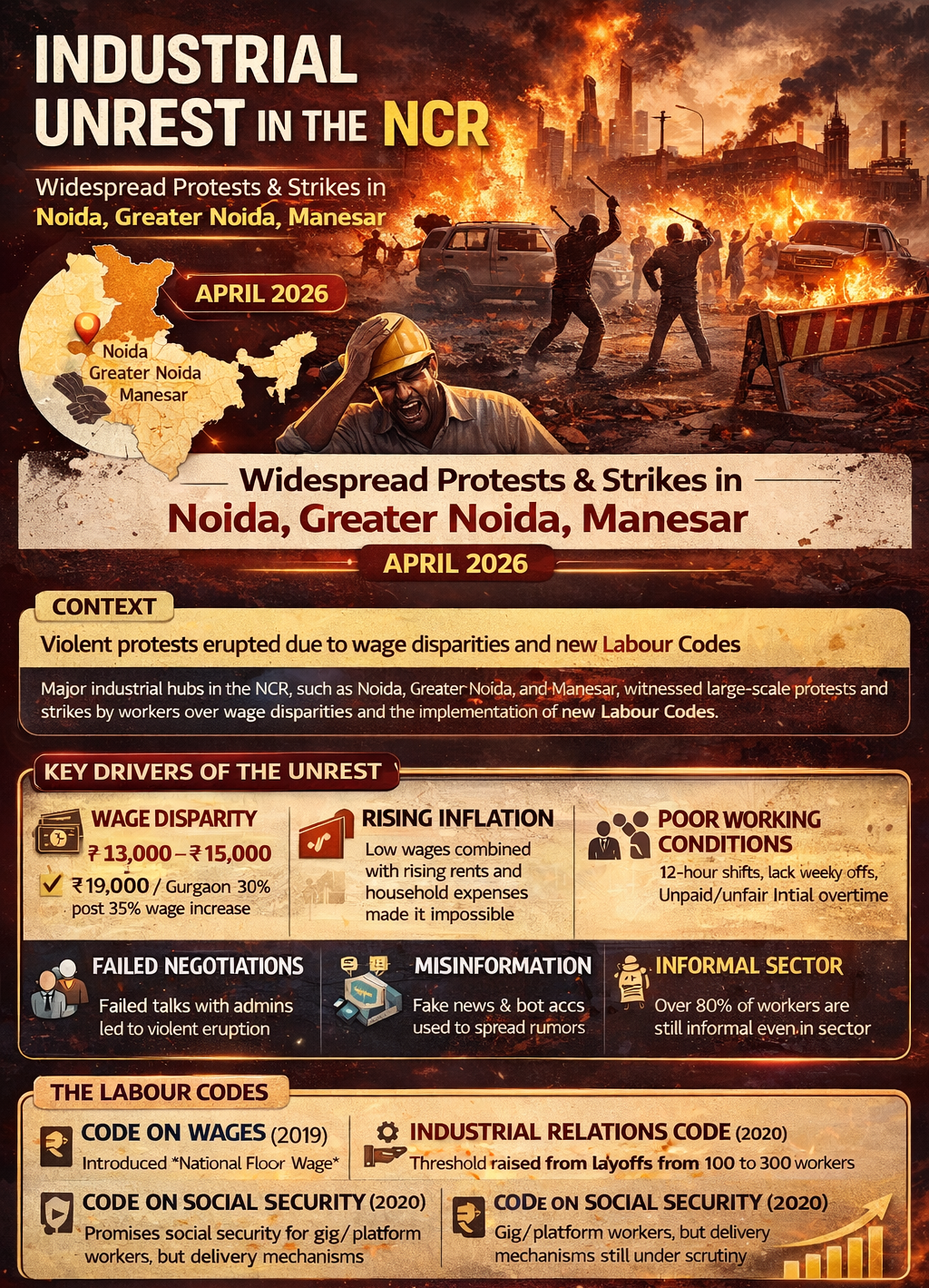
Recently, in April 2026, major industrial hubs such as Noida, Greater Noida, and Manesar witnessed violent protests and strikes by workers. This unrest is the result of discontent stemming from wage disparities and the implementation of the new Labour Codes.
Key Drivers of the Unrest:
-
-
- Significant Wage Disparity with Neighbouring States: The core trigger was the widening pay gap between Noida workers (earning roughly ₹13,000–₹15,000) and those in Gurgaon, Haryana, where a 35% minimum wage increase brought salaries to around ₹19,000, creating severe resentment.
- Rising Inflation and Cost of Living: Workers stated that low wages combined with rising rent and household expenses made it impossible to survive.
- Poor Working Conditions and Exploitation: Reports indicated widespread complaints about 12-hour shifts, lack of weekly off-days, and unpaid or unfairly paid overtime, forcing workers to demand better enforcement of labour laws.
- Failed Negotiations and Slow Administration Response: Initial peaceful protests failed to reach a resolution with employers or the labor department, causing frustration to boil over into violence.
- Misinformation and Instigation: Police identified that WhatsApp groups and social media were used to fuel misinformation (e.g., false reports of deaths), with over 50 bot accounts and external elements trying to incite violence after initial, smaller gatherings had begun to disperse.
- Informalisation of the Organized Sector: Over 80% of workers remain informal even within formal sectors. The rise of contractualization means workers lack the long-term benefits and security of "permanent" staff.
- Significant Wage Disparity with Neighbouring States: The core trigger was the widening pay gap between Noida workers (earning roughly ₹13,000–₹15,000) and those in Gurgaon, Haryana, where a 35% minimum wage increase brought salaries to around ₹19,000, creating severe resentment.
-
The Labor Codes:
The 2026 unrest is deeply intertwined with the notification of the four new Labour Codes in November 2025.
-
-
- Code on Wages (2019): While it introduced a "National Floor Wage," critics argue the lack of a clear setting methodology has led to the very state-wise disparities seen between Haryana and UP.
- Industrial Relations Code (2020): It raised the threshold for government permission for layoffs from 100 to 300 workers. This is perceived by labor unions as a dilution of job security, fueling the "leaderless" nature of the current protests as formal unions lose bargaining power.
- Code on Social Security (2020): Although it promises benefits for gig and platform workers, the actual delivery mechanisms remain under scrutiny.
- Code on Wages (2019): While it introduced a "National Floor Wage," critics argue the lack of a clear setting methodology has led to the very state-wise disparities seen between Haryana and UP.
-
Way Forward:
A Common NCR Minimum Wage Zone is essential to reduce regional imbalance. Strengthening grievance redressal, formalising labour, and ensuring transparent implementation of labour reforms are crucial. Most importantly, India must shift from a minimum wage to a living wage framework supported by sustained tripartite dialogue.
Conclusion:
The NCR unrest highlights the fragility of India’s industrial growth model amid rising inequality and labour insecurity. Sustainable industrialisation requires balancing competitiveness with social justice, ensuring that economic reforms translate into inclusive and stable livelihoods.



