
India’s First Petroglyph Conservation Park in Ladakh
Context:
Recently, taking a significant step towards preserving its prehistoric cultural heritage, India is establishing its first Petroglyph Conservation Park in Ladakh, which was inaugurated on World Heritage Day (18 April 2026). The park is located along the Indus River and aims to conserve prehistoric rock carvings that are under threat from development, tourism, and natural erosion, and which represent a heritage dating back thousands of years.
About Petroglyphs:
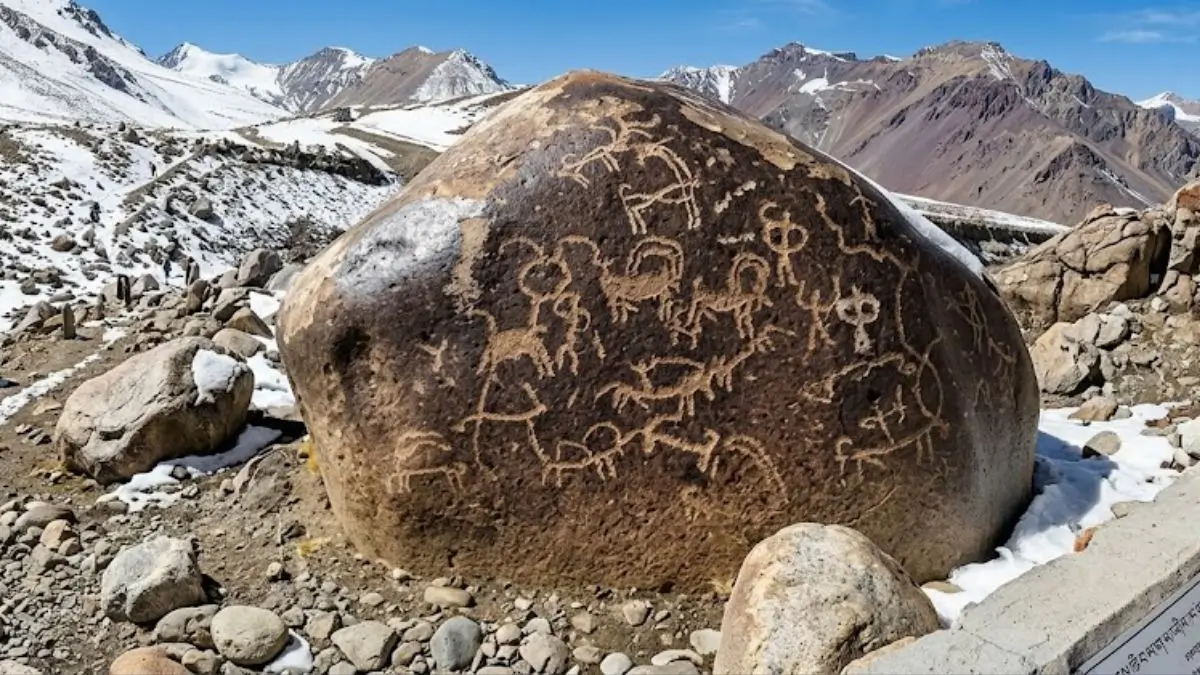
Petroglyphs are prehistoric rock carvings created by engraving symbols, figures, or inscriptions onto rock surfaces. They provide valuable insights into early human life and cultural evolution. In Ladakh, these carvings depict hunting scenes, animals like ibex, religious symbols such as Buddhist stupas, and inscriptions in languages like Sanskrit and Chinese, highlighting the region’s historical role as a cultural crossroads.
About the Petroglyph Conservation Park:
The park will serve as a scientifically managed conservation-cum-interpretation centre. It will house petroglyphs relocated from vulnerable areas and present them in a curated, educational format. Designed as an open-air museum, it will facilitate research, awareness, and tourism while ensuring preservation.
Need for Conservation:
Like other rock art sites in India, such as Bhimbetka Rock Shelters, Ladakh is also significant at the global level.
Ladakh hosts nearly 400 petroglyph sites, making it a major repository of rock art. However, these are threatened by unregulated tourism, infrastructure development, climate conditions, and lack of awareness. Many carvings located along the Indus and Zanskar valleys are particularly at risk. The park aims to safeguard such artefacts and reduce pressure on original sites.
Institutional Framework:
The project involves collaboration between the Archaeological Survey of India and the Ladakh administration through a Memorandum of Understanding. This ensures scientific conservation, documentation, and long-term preservation through coordinated efforts.
Significance of the Initiative:
-
-
- Cultural Importance: Preserves evidence of prehistoric civilisation.
- Sustainable Tourism: Promotes responsible tourism and local livelihoods.
- Educational Value: Acts as a research and learning hub.
- Strategic Relevance: Strengthens Ladakh’s identity as a global heritage destination.
- Cultural Importance: Preserves evidence of prehistoric civilisation.
-
Challenges:
-
-
- Risks associated with relocation: Removing petroglyphs from their original sites may affect their historical context and authenticity.
- Financial constraints: The high costs of conservation, transportation, and maintenance in the high-altitude Himalayan region may place financial pressure on the project.
- Need for community participation: Without the active involvement of local communities, ensuring the long-term success of conservation efforts becomes difficult.
- Balancing development and conservation: Infrastructure development and expanding tourism increase pressure on heritage sites, making conservation efforts more challenging..
- Risks associated with relocation: Removing petroglyphs from their original sites may affect their historical context and authenticity.
-
Conclusion:
The Petroglyph Conservation Park marks a major step in preserving India’s ancient heritage. It integrates conservation with education and tourism, ensuring that development aligns with cultural preservation while strengthening long-term India–heritage sustainability goals.



