
Hantavirus Outbreak on Cruise Ship
Context:
Recently, three passengers have died and three others have fallen ill following a suspected hantavirus outbreak aboard a Netherlands-based cruise ship in the Atlantic Ocean. The vessel is currently anchored off the coast of Cape Verde, raising concerns over maritime health security, port access rights, and global outbreak preparedness.
Port Restrictions:
-
-
- Cape Verde authorities denied disembarkation to protect domestic public health.
- Medical teams were allowed onboard for assessment and initial response.
- The situation reflects the growing tension between public health security and maritime mobility.
- Cape Verde authorities denied disembarkation to protect domestic public health.
-
About Hantavirus:
-
-
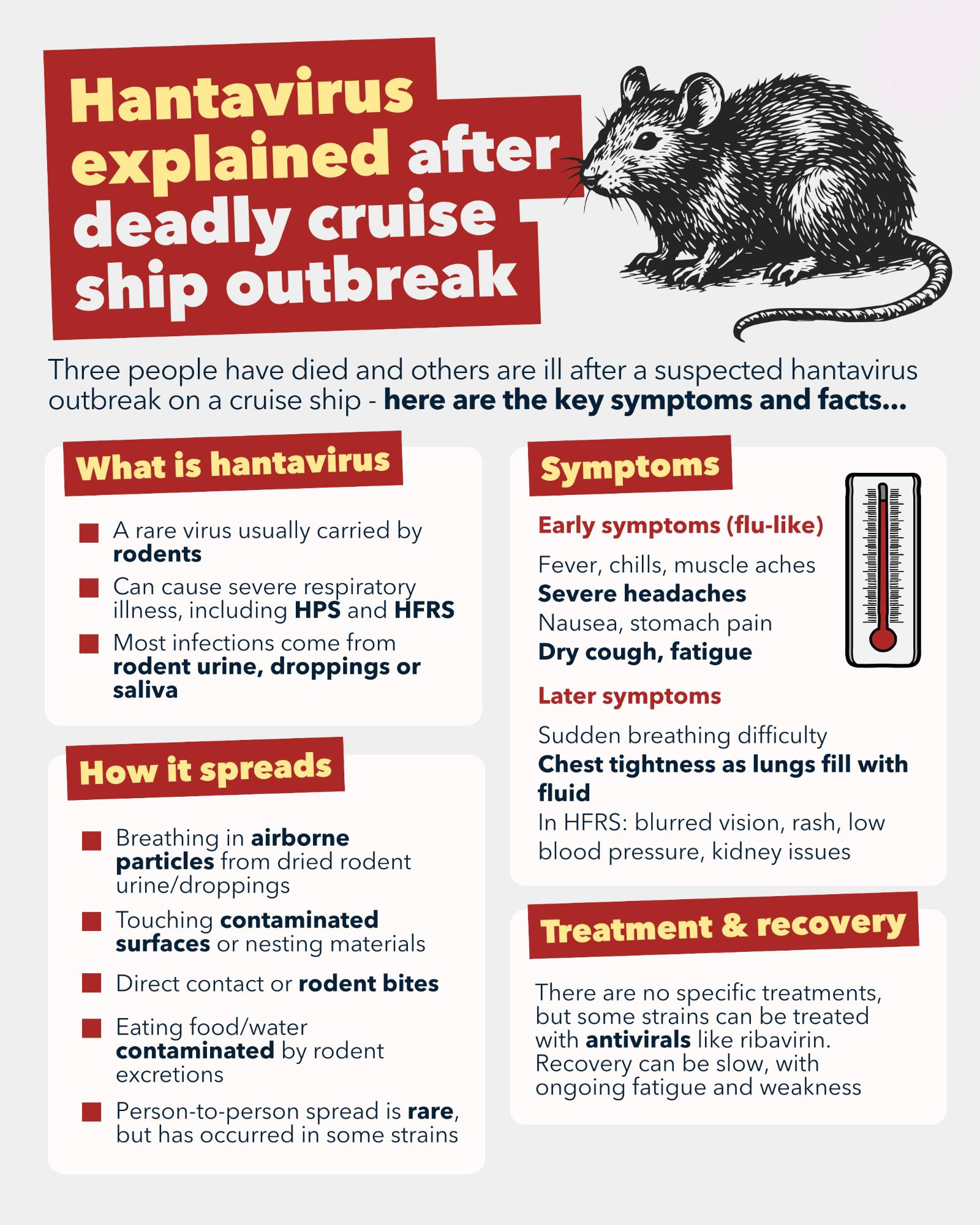
- Hantavirus is a zoonotic virus that primarily spreads from rodents (such as rats) to humans and is considered a serious public health threat. It belongs to the Hantaviridae family and causes two major diseases in humans—Hantavirus Pulmonary Syndrome (HPS), which affects the lungs, and Hemorrhagic Fever with Renal Syndrome (HFRS), which damages the kidneys.
- The virus was first identified in the 1970s in the Hantan River region of South Korea. Today, it is found in different parts of the world, with various strains present in different regions. The infection mainly spreads through inhalation of microscopic particles contaminated with the urine, feces, or saliva of infected rodents.
- Symptoms usually appear 1–8 weeks after infection and include fever, fatigue, headache, and muscle pain. In severe cases, HPS can lead to respiratory failure, while HFRS may cause kidney failure. There is no specific treatment or vaccine available, making early detection and supportive medical care extremely important.
- Hantavirus is a zoonotic virus that primarily spreads from rodents (such as rats) to humans and is considered a serious public health threat. It belongs to the Hantaviridae family and causes two major diseases in humans—Hantavirus Pulmonary Syndrome (HPS), which affects the lungs, and Hemorrhagic Fever with Renal Syndrome (HFRS), which damages the kidneys.
-
Legal Dimensions:
-
-
-
International Health Regulations (IHR, 2005)
- Requires balancing disease control with minimal disruption to travel and trade
- Cape Verde’s refusal reflects the “Sovereign Shield” principle, prioritizing domestic safety over maritime access
- Requires balancing disease control with minimal disruption to travel and trade
-
UNCLOS and Right of Entry
- Coastal states control port access under UNCLOS
- Ships in distress may seek safe harbor under customary law
- However, during outbreaks, this is often restricted, leading to “floating quarantine” situations like the Diamond Princess (2020)
- Coastal states control port access under UNCLOS
-
-
Way Forward:
-
-
- Standardized bio-security protocols for cruise ships
- Pre-designated ports of refuge for medical emergencies
- Strengthening WHO coordination under IHR (2005)
- Improved rodent surveillance in maritime environments
- Integration of health security into maritime law frameworks
- Standardized bio-security protocols for cruise ships
-
Conclusion:
The hantavirus outbreak highlights the intersection of zoonotic disease risks, maritime mobility, and gaps in global governance. It underscores the need for stronger international coordination to balance public health security, human rights, and freedom of navigation in a highly interconnected world.



