
New Snake Species Calamaria garoensis
Context:
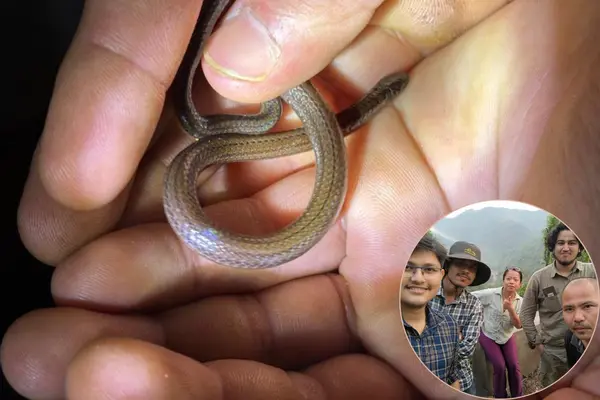
Recently, A new species of snake, Calamaria garoensis, has been discovered in the Garo Hills region of Meghalaya.
About Calamaria garoensis:
-
-
- Calamaria garoensis belongs to the genus Calamaria, commonly known as reed snakes. These are:
- Small, non-venomous, and secretive snakes
- Typically found underground or within leaf litter
- Difficult to detect due to their hidden lifestyle
- Small, non-venomous, and secretive snakes
- The species was identified through detailed taxonomic analysis after field surveys in dense forest ecosystems.
- The species was discovered through a collaborative effort involving several institutions, including the Zoological Survey of India, Help Earth etc. This highlights the importance of interdisciplinary and international collaboration in biodiversity research, especially in ecologically rich but underexplored regions.
- Calamaria garoensis belongs to the genus Calamaria, commonly known as reed snakes. These are:
-
About Garo Hills:
-
-
- The Garo Hills is part of the Indo-Burma Biodiversity Hotspot, one of the richest ecological regions in the world. It features:
- Dense tropical and subtropical forests
- High diversity of reptiles and amphibians (herpetofauna)
- Many unexplored habitats
- Dense tropical and subtropical forests
- The discovery indicates that many species remain undocumented in Northeast India.
- The Garo Hills is part of the Indo-Burma Biodiversity Hotspot, one of the richest ecological regions in the world. It features:
-
Significance of the Discovery:
-
-
- Enhances scientific understanding of India’s biodiversity
- Highlights the ecological richness of Northeast India
- Strengthens the case for forest and wildlife conservation
- Brings global attention to lesser-known species and habitats
- Enhances scientific understanding of India’s biodiversity
-
Conclusion:
The discovery of Calamaria garoensis underscores the immense but still underexplored biodiversity of Northeast India. It highlights the need for continued research, conservation efforts, and sustainable management of fragile ecosystems to protect India’s natural heritage.



