
Context:
Recently, the Defence Research and Development Organisation (DRDO) successfully conducted a long-duration ground test of its Actively Cooled Scramjet Full-Scale Combustor, achieving a run time of over 12 minutes. The test was conducted at the Scramjet Connect Pipe Test (SCPT) facility of the Defence Research and Development Laboratory (DRDL) in Hyderabad. This achievement marks a significant milestone in India’s pursuit of hypersonic missile capabilities, at a time when global competition in advanced missile technologies is intensifying.
About Scramjet Technology:
-
-
- A scramjet (Supersonic Combustion Ramjet) is an air-breathing propulsion system designed to operate efficiently at hypersonic speeds, typically above Mach 5 (five times the speed of sound).
- Unlike conventional rocket engines, scramjets utilise atmospheric oxygen for combustion, enabling sustained propulsion under supersonic airflow conditions. This eliminates the need to carry onboard oxidisers, thereby reducing vehicle weight and enhancing fuel efficiency.
- A scramjet (Supersonic Combustion Ramjet) is an air-breathing propulsion system designed to operate efficiently at hypersonic speeds, typically above Mach 5 (five times the speed of sound).
-

Significance of the Test:
-
-
- The successful test validates both the full-scale combustor design and the operational capability of the SCPT facility, placing India among a select group of nations capable of developing indigenous hypersonic propulsion systems.
- This milestone builds upon earlier sub-scale scramjet tests conducted in April 2025, which demonstrated stable combustion for over 1,000 seconds, indicating progress toward long-duration hypersonic operation.
- The successful test validates both the full-scale combustor design and the operational capability of the SCPT facility, placing India among a select group of nations capable of developing indigenous hypersonic propulsion systems.
-
Strategic and Defence Implications:
-
-
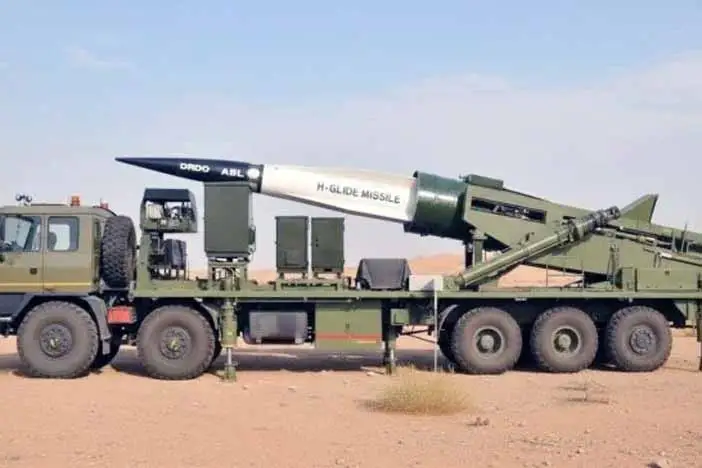
- Advancement of Hypersonic Cruise Missiles: Hypersonic cruise missiles can sustain speeds exceeding Mach 5 (over 6,100 km/h), enabling rapid precision strikes while significantly reducing reaction time for adversaries and challenging existing missile defence systems.
- Strengthening Indigenous Technological Capability: The successful development of an indigenously designed, actively cooled scramjet combustor reflects India’s growing self-reliance in critical defence technologies, aligned with strategic autonomy objectives.
- Broader Aerospace Applications: Beyond military use, scramjet technology has potential applications in hypersonic vehicles, rapid global transportation systems, and future space-access platforms, highlighting its dual-use civilian and defence relevance.
- Advancement of Hypersonic Cruise Missiles: Hypersonic cruise missiles can sustain speeds exceeding Mach 5 (over 6,100 km/h), enabling rapid precision strikes while significantly reducing reaction time for adversaries and challenging existing missile defence systems.
-
Global Context
-
-
- Hypersonic technology represents the cutting edge of modern defence innovation, integrating high-speed propulsion, advanced materials, thermal management, and precision guidance systems.
- Major powers such as the United States, Russia, and China are actively investing in hypersonic weapons to gain strategic and military superiority. India’s successful 12-minute combustor test strengthens its geostrategic posture and contributes to the development of a credible deterrence capability.
- Hypersonic technology represents the cutting edge of modern defence innovation, integrating high-speed propulsion, advanced materials, thermal management, and precision guidance systems.
-
Challenges Ahead:
-
-
- Despite this progress, several challenges remain, including flight integration, sustained thermal management, structural integrity, and guidance stability at hypersonic speeds. Achieving a successful airborne demonstration will be the next critical milestone in translating ground-test success into operational capability.
- Despite this progress, several challenges remain, including flight integration, sustained thermal management, structural integrity, and guidance stability at hypersonic speeds. Achieving a successful airborne demonstration will be the next critical milestone in translating ground-test success into operational capability.
-
Conclusion:
The 12-minute scramjet combustor ground test represents a landmark achievement in India’s hypersonic technology programme. It underscores the country’s ability to develop indigenous, long-endurance hypersonic propulsion systems and lays a strong foundation for future hypersonic missile development and advanced aerospace innovation.



