Daily-current-affairs
/
20 Oct 2020
Kaleshwaram Lift Irrigation Project (KLIP) : Daily Current Affairs
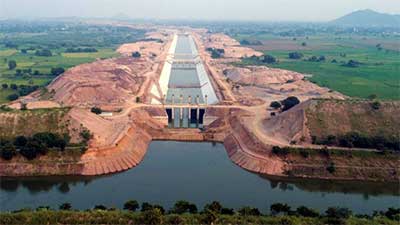
Kaleshwaram Lift Irrigation Project (KLIP)
Why in NEWS ?
- NGT has held that environmental clearance (EC) to Kaleshwaram Lift Irrigation Project
(KLIP) was granted ex post facto, after completion of substantial work, by the Ministry of
Environment, Forests and Climate Change (MoEF&CC) “in violation of law”.
About
- NGT has also observed that accountability needs to be fixed and remedial measures
be taken, thus it has directed the MoEF&CC to constitute a seven-member expert
committee preferably out of expert appraisal committee (EAC) members with
relevant sectorial expertise to go into the matter in light of the observations in the
present case.
- The Principal Bench of NGT asked the Ministry to constitute the expert committee
within a month and it may complete its exercise within six months thereafter
shouldering the responsibility of monitoring the panel work to the Secretary of
MOEF&CC.
- The petitioner moved the NGT with a contention declare the EC granted to KLIP as
invalid since substantial work was done by the State Government, project
proponent, prior to filing application with the Ministry for clearance.
- The NGT Principal Bench suggested that the expert committee could assess the
extent of damage caused in going ahead with the project without EC – the period
from 2008 to 2017 — and identify the necessary restoration measures.
- Further, it could look into relief and rehabilitation measures adopted and required to
be further adopted, examine effective implementation of environmental
management plan (EMP) submitted by the project proponent as also compliance of
EC conditions.
- “Any affected party will be at liberty to make representation to the MoEF&CC within
three weeks along with suggestions and grievances, which may be taken into the
account by the expert committee”, the NGT said in its judgement. It has further
asked MoEF&CC to consider measures to prevent recurrence of such violations
where EC is sought ex post facto.
How it amounts to violation of Law ?
- It is particularly required when the projects are multi-purpose and part of it requires
EC, so that such requirement is not defeated on specious plea that the project was
partly not covered by the schedule Environmental Impact Assessment (EIA)
Notification as has happened in the present case, the NGT observed.
- Instead of confining consideration merely to documentary support, a mechanism is
required to be evolved and followed whereby physical verification of material
particulars can be undertaken, wherever necessary, it suggested.
Kaleshwaram Lift Irrigation Project (KLIP)
- The Kaleshwaram lift irrigation project is aimed to make Telangana drought proof by
harnessing the flood waters of the Godavari.
- The project is an under-construction multi-purpose irrigation project on the Godavari
River in Kaleshwaram, Bhoopalpally, Telangana.
- The Kaleshwaram project is an off-shoot of the original Pranahitha-Chevella Lift
Irrigation Scheme taken up by the Congress government in 2007 when Andhra
Pradesh was not divided.
- After conducting a highly advanced Light Detection and Ranging (LiDAR) survey for a
couple of months, the government separated the original component serving the
Adilabad area as the Pranahitha project and renamed the rest as Kaleshwaram by
redesigning the head works, storage capacity and the canal system based on the
data of availability of water at different locations along the course of the Godavari
and its tributaries.
- Waters of the Godavari will be tapped by reverse pumping and storage, thereby
facilitating agriculture on over 38 lakh acres, helping rejuvenate thousands of tanks,
providing water for industries, and supplying drinking water to Hyderabad and
Secunderabad by creating a series of storage tanks and a network of pipelines.
- Barrages have been constructed at Medigadda, Annaram, and Sundilla, from which
water will be moved to fill Yellampalli and Sriram Sagar Projects.
National Green Tribunal (NGT)
- National Green Tribunal (NGT) was established on 18th October 2010 under the NGT
Act of 2010 as a specialized body for handling any environmental disputes that
involve multi-disciplinary issues. It was formed by replacing the National
Environment Appellate Authority.
- The National Green Tribunal (NGT) is a specialized body that was formed under the
NGT Act, 2010 for effective and expeditious disposal of cases that are related to the
protection and conservation of the environment, forests, and other natural
resources.
- India has become the third country in the world after Australia and New Zealand, for
setting up a specialized environmental tribunal and also the first developing country
to do so.
- The National Green Tribunal has a total of five places of sittings namely: Bhopal,
Pune, New Delhi, Kolkata, and Chennai, amongst which, New Delhi is the Principal
place of sitting.
- It also draws inspiration from Article 21 of the India Constitution which assures to
provide a healthy environment to the citizens of India.
Objectives
- Effective and expeditious disposal of cases that are related to the protection and
conservation of the environment, forests, and other natural resources.
- To give relief and compensations for any damages caused to persons and properties.
- To handle various environmental disputes that involve multi-disciplinary issues.
Structure of NGT
- The National Green Tribunal (NGT) comprises three major bodies namely: the
Chairperson, the Judicial Members, and the Expert Members.
- There should be a minimum of 10 and a maximum of 20 fulltime Judicial as well as
Expert members in the NGT.
- All these members are required to hold the office for five years and are not eligible
for reappointment.
- The Chairperson of the NGT is appointed by the Central Government of India in
accordance with the Chief Justice of India.
- A Selection Committee is formed by the central government of India for the
appointment of Judicial Members and Expert Members.




