
Context:
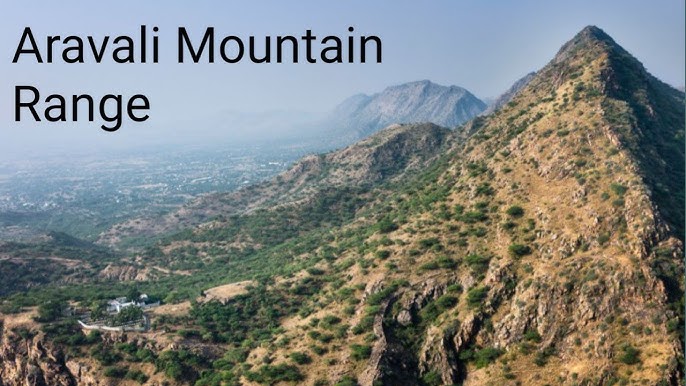
In India’s geographical structure, certain natural elements are not merely landforms but shape the climate, ways of life, and civilisational continuity of entire regions. The Aravalli mountain range is one such element. Stretching from Gujarat through Rajasthan and Haryana to Delhi, this ancient mountain system is not only among the oldest geological formations in the world, but has also functioned as a natural protective shield for northern India.
-
-
-
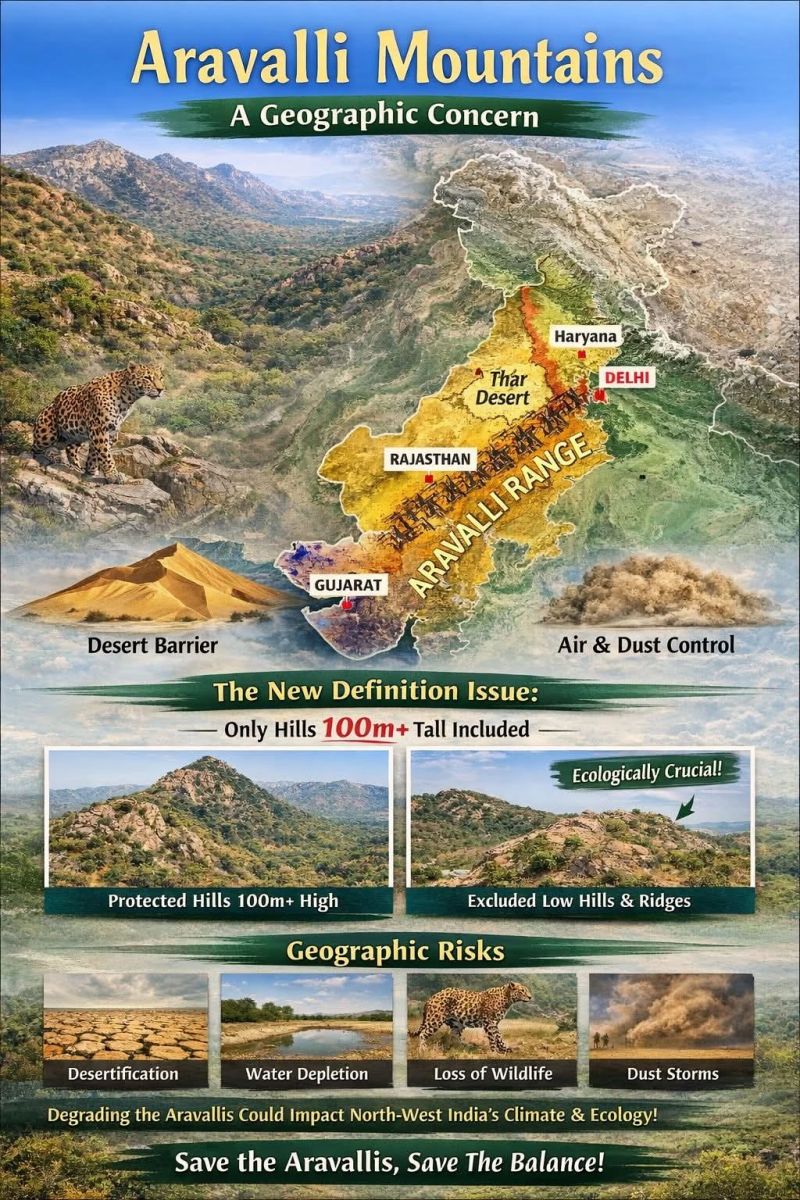
- Recently, on December 29, the Supreme Court, taking suo motu cognizance, stayed its own order that had recognized the central government's new geographical definition of the Aravalli region, according to which only those areas with an elevation of 100 meters or more above the surrounding land would be considered part of the Aravalli range.
The Supreme Court stated that this stay would remain in effect until the current proceedings reach a final conclusion, and that no irreversible administrative or ecological actions should be taken based on the existing framework until then. The next hearing on this matter is scheduled for January 21, 2026.
Before the stay of the order, the decision had sparked the #SaveAravalli campaign and protests in several states, including Rajasthan.
- Recently, on December 29, the Supreme Court, taking suo motu cognizance, stayed its own order that had recognized the central government's new geographical definition of the Aravalli region, according to which only those areas with an elevation of 100 meters or more above the surrounding land would be considered part of the Aravalli range.
-
-
Development versus Conservation:
-
-
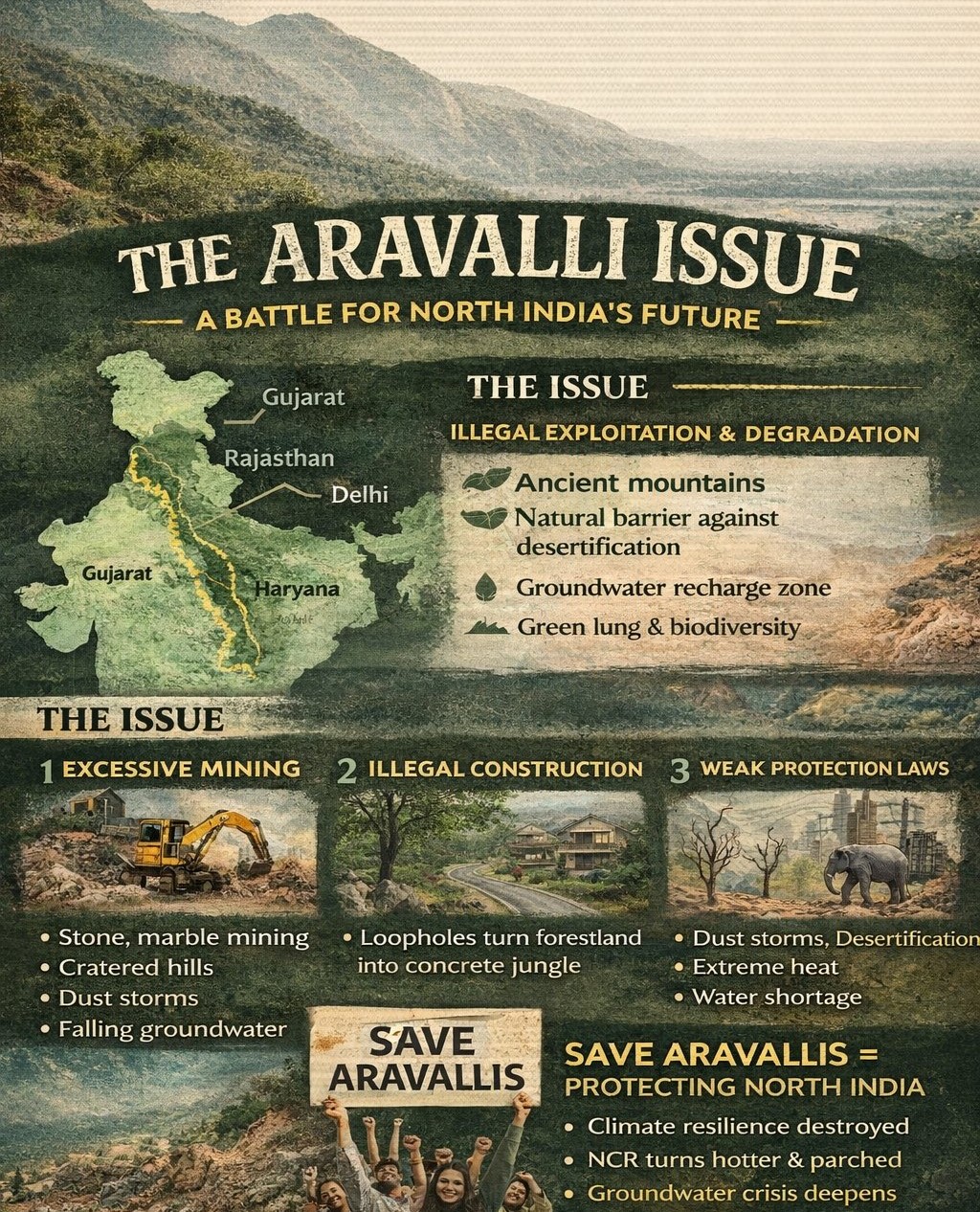
- The Aravalli controversy highlights the persistent tendency in India to view development and environmental protection as opposing objectives. In reality, conservation of the Aravallis is not an obstacle to development but a prerequisite for it.
- Urban development without water security is inherently unstable.
- Economic productivity declines in the absence of clean air.
- Ecological imbalance increases the risk of disasters.
- Urban development without water security is inherently unstable.
- Thus, while degradation of the Aravallis may generate short-term economic gains, it is detrimental in the long run to the economy, public health, and social stability.
- The Aravalli controversy highlights the persistent tendency in India to view development and environmental protection as opposing objectives. In reality, conservation of the Aravallis is not an obstacle to development but a prerequisite for it.
-
Ecological Significance of the Aravallis:
-
-
- Natural Barrier Against Desertification
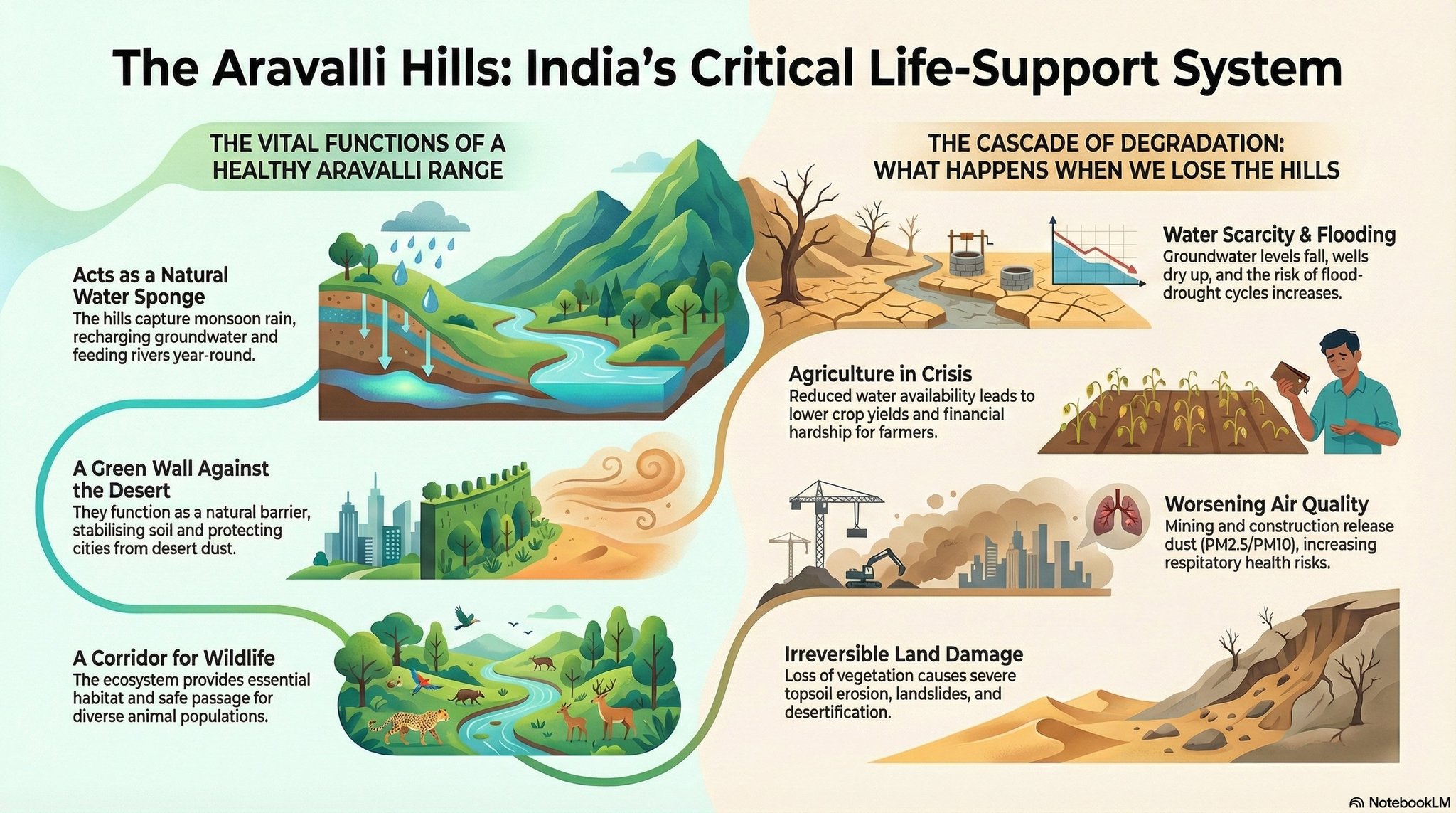
- The Aravalli range acts as a geographical barrier between the Thar Desert and the fertile plains of northern India. It prevents sand, dust, and hot winds originating in western Rajasthan from spreading eastward and northward.
- If the Aravallis weaken further, the process of desertification could intensify in Haryana, Delhi, and western Uttar Pradesh, adversely affecting agriculture, public health, and food security.
- The Aravalli range acts as a geographical barrier between the Thar Desert and the fertile plains of northern India. It prevents sand, dust, and hot winds originating in western Rajasthan from spreading eastward and northward.
- Air Quality and Urban Climate
- The Aravalli region functions as a green buffer for the Delhi–NCR. Vegetation cover and terrain together help arrest dust particles and regulate temperature.
- Its degradation could worsen air pollution, intensify the urban heat island effect, and increase the frequency of extreme temperature events—challenges already confronting urban India.
- The Aravalli region functions as a green buffer for the Delhi–NCR. Vegetation cover and terrain together help arrest dust particles and regulate temperature.
- Water Security and Groundwater Recharge
- The rocky structure of the Aravallis allows rainwater to percolate slowly into the ground, replenishing aquifers.
- In water-stressed regions such as Rajasthan, Haryana, and Delhi, this role is of strategic importance. Degradation of the Aravallis directly undermines India’s water security.
- The rocky structure of the Aravallis allows rainwater to percolate slowly into the ground, replenishing aquifers.
- Biodiversity and Local Livelihoods
- The Aravalli region supports diverse vegetation, medicinal plants, and wildlife. Local livelihoods—such as pastoralism, grazing, and the collection of minor forest produce—are deeply dependent on this ecosystem.
- Its degradation therefore causes not only environmental damage but also socio-economic imbalance.
- The Aravalli region supports diverse vegetation, medicinal plants, and wildlife. Local livelihoods—such as pastoralism, grazing, and the collection of minor forest produce—are deeply dependent on this ecosystem.
- Natural Barrier Against Desertification
-
Constitutional and Legal Dimensions:
-
-
- Duties of the State: Article 48A of the Indian Constitution mandates the State to protect and improve the environment and safeguard forests and wildlife. This provision makes environmental protection not a policy choice but a constitutional obligation.
- Duties of Citizens: Article 51A(g) casts a duty upon citizens to protect the natural environment, including forests, rivers, lakes, and wildlife. If the State itself retreats from conservation responsibilities, it weakens the very spirit of citizens’ duties.
- Judicial Principles: Indian environmental jurisprudence has evolved key principles such as sustainable development, the precautionary principle, the polluter-pays principle, and inter-generational equity. Excluding the Aravallis from protection through narrow definitions appears to run contrary to the spirit of these principles.
- Duties of the State: Article 48A of the Indian Constitution mandates the State to protect and improve the environment and safeguard forests and wildlife. This provision makes environmental protection not a policy choice but a constitutional obligation.
-
Challenges:
-
-
- Federalism and Inter-State Coordination: The Aravalli range spans multiple states. Effective conservation therefore requires strong inter-state coordination and a shared vision.
- Climate Change and Adaptation: In an era of rising temperatures and erratic rainfall, natural barriers such as the Aravallis play a critical role as climate adaptation infrastructure.
- Failure of Urban Governance: The pressure on the Aravallis reflects deeper shortcomings in India’s urban planning, which remains insufficiently environment-centric.
- Federalism and Inter-State Coordination: The Aravalli range spans multiple states. Effective conservation therefore requires strong inter-state coordination and a shared vision.
-
Way Forward:
-
-
- Protecting the Aravalli mountain range requires a long-term, science-based, and participatory approach. First, the identification of the Aravallis should not be restricted to height-based criteria alone. Instead, it must be grounded in geological structure, ecological continuity, and historical evolution, so that its true ecological role is recognised.
- Second, legal protection must be strengthened. Large portions of the Aravalli region should be designated as Eco-Sensitive Zones, special conservation areas, or conservation-oriented land-use categories, ensuring clear and binding limits on development activities.
- Third, effective control over mining and land use is essential. Illegal mining, encroachment, and unregulated construction must be addressed through strict monitoring, deterrent penalties, and robust technological surveillance mechanisms.
- Fourth, conservation efforts must ensure the participation of local communities. Co-management models can help balance traditional knowledge, livelihood security, and environmental protection.
- Finally, urban planning must treat the Aravallis not as vacant land but as green infrastructure, essential for ensuring water security, air quality, and climate resilience in the Delhi–NCR and surrounding regions.
- Protecting the Aravalli mountain range requires a long-term, science-based, and participatory approach. First, the identification of the Aravallis should not be restricted to height-based criteria alone. Instead, it must be grounded in geological structure, ecological continuity, and historical evolution, so that its true ecological role is recognised.
-
Conclusion:
-
-
- The policy and judicial debate surrounding the definition and protection of the Aravalli range has once again placed this mountain system at the centre of national discourse. This debate is not merely a technical discussion on land classification; it exposes deeper tensions related to environmental security, water stress, climate change, and the development–conservation dichotomy.
- At its core, the Aravalli crisis is not only about mining or encroachment, but about a flawed approach to environmental governance. A height-based definition of 100 metres overlooks geological realities, as the Aravallis are an ancient, highly eroded, and relatively low mountain system. Their identity lies not in elevation, but in geological structure, ecological function, and geographical continuity.
- The Aravalli range constitutes the ‘great natural wall’ of northern India, protecting the region from desertification, water scarcity, pollution, and climatic instability.
- Its conservation is therefore not merely an environmental option, but a matter of constitutional duty, developmental prudence, and inter-generational responsibility. If India is to move towards sustainable, inclusive, and resilient development, it must free Aravalli protection from policy ambiguities and adopt a firm, scientific, and forward-looking conservation vision.
- The policy and judicial debate surrounding the definition and protection of the Aravalli range has once again placed this mountain system at the centre of national discourse. This debate is not merely a technical discussion on land classification; it exposes deeper tensions related to environmental security, water stress, climate change, and the development–conservation dichotomy.
-
| UPSC / PCS Mains Examination Question: The recent controversy over adopting a uniform definition of the Aravalli mountain range has once again brought the development versus conservation debate to the forefront. In this context, critically examine the role of the Supreme Court, mining policy, and environmental concerns. |



