Daily-current-affairs
/
19 Nov 2020
PESA Act : Daily Current Affairs
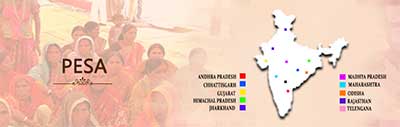
PESA Act
Why in News?
- Tribals from Chhattisgarh gave Consultations to state government in PESA
Act rules for need to make stronger gram sabhas.
About
- At a Gothan in Kanker district’s Khairkheda, representatives of 16
tribal blocks from five Chhattisgarh districts gathered to put forth their
expectations from the rules to be devised under the Panchayat (Extension to
Scheduled Area) Act, 1996, also known as PESA Act.
- The space chosen for the meeting, 110 km from state capital Raipur,
falls in the North Bastar region. The bottomline for most of the
representatives from Kanker, Kondagaon, Narayanpur, Balod and Dhamtari
districts— stronger gram sabhas and localised power.
- State Panchayat Minister T S Singh Deo attended the meeting organised
along with the Sarva Adiwasi Samaj, and said the government is likely to
notify the rules by the Budget Session. He assured representatives that this
would be the first of several meetings.
- At the meeting, representatives from Keshkal block in Kanker expressed
unhappiness over the government’s decision to take away revenue and control
of sand mining in their region. Similarly, representatives of Kanker block
of the same district requested that the power to get tribal land back from
non-tribals should be given to the gram sabha.
- Officials invited statements and written suggestions from all those
assembled.
- The representatives put forth their comments on various sections of the
PESA Act—more representation and power for gram sabhas, food security in the
hinterlands, authority over the water bodies in the village area and
long-term social dispute resolution by giving representation of all tribes
living in these areas, irrespective of their numbers. Most also demanded a
stop over what they termed was the “financial abuse” of tribals.
- A request was made by representatives from Pharasgaon block in Kondagaon
district that any construction work in the villages begin only after a nod
from the gram sabha, and a completion certificate be awarded by the sabha
for every project.
Panchayat (Extension to Scheduled Area) Act (PESA Act)
- PESA is a law enacted by Government of India to cover the “Scheduled
Areas”, which are not covered in the 73rd Constitutional amendment.
- This particular act extends the provisions of Part IX to the Scheduled
Areas of the country. PESA brought powers further down to the Gram Sabha
level.
- The PESA Act was enacted by the Centre to ensure self-governance through
Gram Sabhas for people living in scheduled areas. Although several laws were
tweaked to adjust for this law, it lacks direct rules and thus can’t be
implemented. While six states have formed laws, Chhattisgarh has just
started the process.
- The Gram Sabha in the Panchayat Act were entrusted with wide ranging
powers starting from consultation on land acquisition to that of ownership
over minor forest produces and leasing of minor minerals.
- PESA became operative at a time when Indian economy was opening up all
its frontiers to foreign direct investment. The mining sector, which is
mostly located in the scheduled areas of the country where PESA operates,
were made open to MNCs and the Indian Corporate sector for exploitation of
mineral resources at a throwaway price.
- One of the highlighting features of PESA is its suggestion that, every
Gram Sabha shall be competent to safeguard and preserve the traditions and
customs of the people, their cultural identity, community resources and the
customary mode of dispute resolution.
Gram Sabha
- Gram Sabha is the fulcrum of the Panchayati Raj and village development.
People use the forum of the Gram Sabha to discuss local governance and
development, and make need- based plans for the village.
- The Panchayat implements development programs under the overarching
mandate, supervision and monitoring of the Gram Sabha. All decisions of the
Panchayat are taken through the Gram Sabha and no decision is official and
valid without the consent of the Gram Sabha.
- The term Gram Sabha is defined in the Constitution of India under
Article 243(b). Gram Sabha is the Sabha of the electorate. All other
institutions of the Panchayati Raj like the Gram Panchayat, Block Panchayat
and Zilla Parishad are constituted by elected representatives.
- Persons, those who are above 18 years of age, living in the village
and whose names are included in the electoral rolls for the Panchayat
at the village level are the members of Gram Sabha.
Functions
- To help implementation of the development programmes and schemes of the
Panchayat.
- To identify beneficiaries for different programmes and schemes. However,
if the Gram Sabha fails to identify such beneficiaries within a reasonable
time, the Gram Panchayat shall identify the beneficiaries.
- To solicit support — in cash or kind or both and voluntary labour — from
the public for community welfare programmes.
- To support the programmes of mass education and family welfare.
- To promote unity and harmony among all sections of the society in the
village.
- To seek clarification from the Mukhiya, Up-Mukhiya and other members of
the Gram Panchayat about any particular activity, scheme, income and
expenditure.
- To discuss and recommend appropriate action with regard to reports of
the Vigilance Committee.
- Other related matters brought to the notice of the Gram Sabha.
- To consider levy of taxes, rates, rents & fees & enhancement of rates
thereof.
- To consider all such matters as may be referred by the Gram Panchayat
for its decision.




